Wolfsburg decided when to contract, not whether
Posted on: 13 July 2026
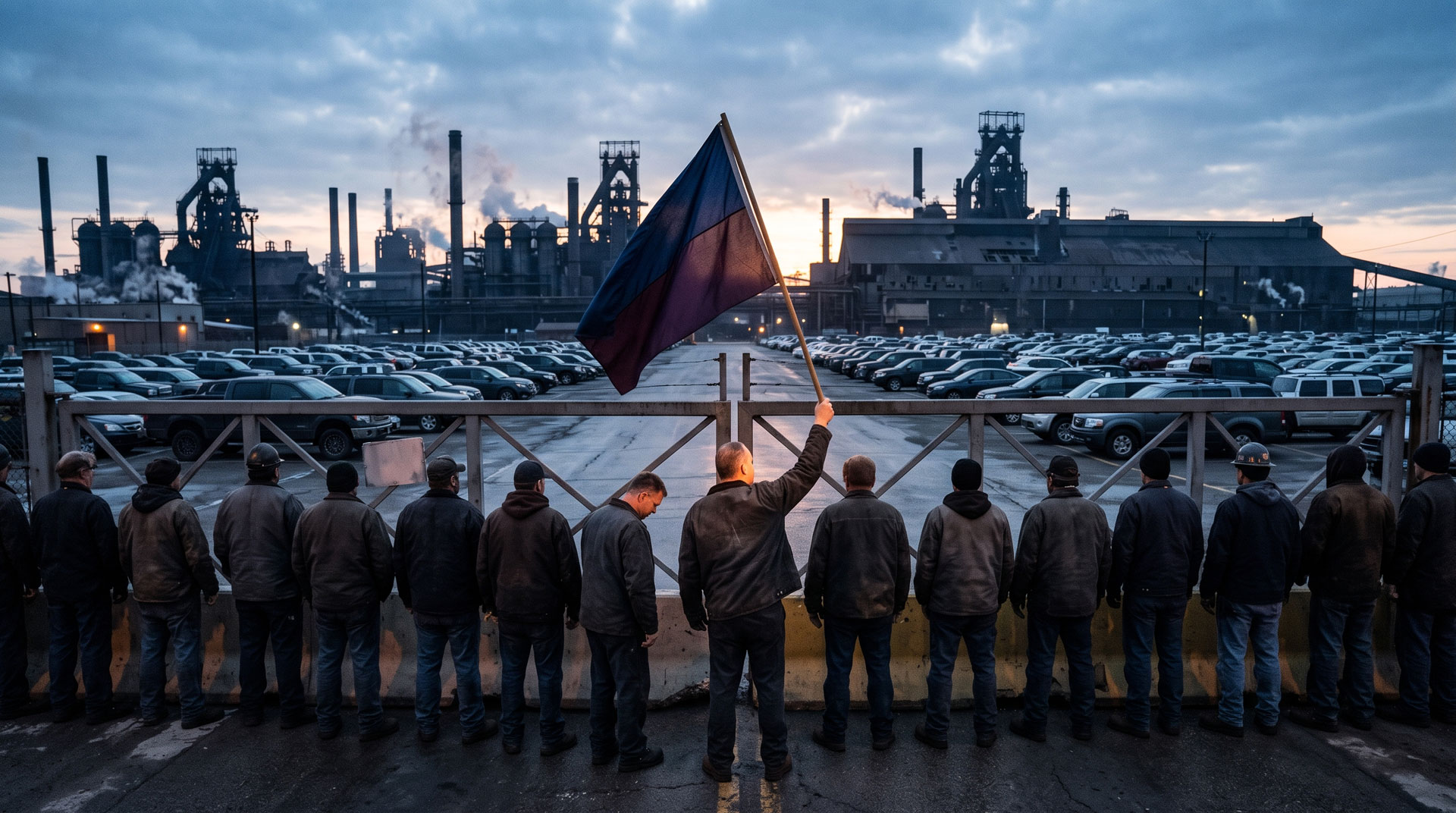
In 2024 it took five rounds of talks and the hardest warning strikes Volkswagen had seen in years, because agreement at Wolfsburg is not granted by resolution but wrenched out under pressure, and that trench warfare produced what the unions called a victory, no plant closed and no forced redundancy, the in house contract sealed to the end of the decade with a one billion euro penalty owed by the company should it impose compulsory cuts before 2030. Except that the same signature already conceded thirty five thousand jobs gone by 2030 anyway. Read two years later, the victory was a choice about how long to defer the contraction, not whether to suffer it.
The thing to grasp is not the scale of the cuts but the gap between who decides and who pays, because at Wolfsburg the two do not coincide. Porsche SE controls 53.3 per cent of the votes, yet the Porsche and Piech families have watched tens of billions in value evaporate from their core holding, which means that the party carrying the real economic exposure to the decline has a wallet full of consequences and its hands relatively tied. On the other side labour holds ten of nineteen seats, after the sudden departure of Susanne Wiegand from the board stripped chairman Poetsch even of the casting vote that used to break deadlock. Whoever sits there defending the plants is not risking their own capital in the long run failure, the risk falls on those without the numbers to impose a course. The decision is structurally severed from its consequence, a condition no amount of good governance training resolves because it is written into the Volkswagen Law before it is written into the people around the table, the statute that demands a two thirds majority to close a protected plant and that lines up alongside the unions the 20 per cent voting stake of Lower Saxony.
That this is not theory is confirmed by Blume's two predecessors. Diess in 2022 and Pischetsrieder in 2006 did not fall over bad numbers but for having pushed labour past the point at which labour agrees to be pushed. In this system whoever breaks the consensus is out, and is out even when right about the figures. Blume knows it, which is why a chief executive with a mediator's reputation finds himself proposing the harshest plan in the group's history, not because he has changed but because the room in which one used to mediate has run out.
Britain watched a version of this in slow motion, in coal and then in steel, where the pit or the works stayed open long after the economics had left the building because a plant is never only a plant. It is a town, a supply chain, a promise made to a region and a piece of political consent that no board erases by resolution without paying for it somewhere else. Physical capacity built and tuned for a world that has ended does not convert on command and does not switch off on command, it outlives its own usefulness through the same social gravity that today keeps Hanover and Emden running while demand has already gone east. What Redcar and the Welsh valleys learned, Lower Saxony is about to.
On 9 July the board untied the knot in the way the system all but dictates. The closures were approved, not refused, but spread across a span of years that defuses the shock, Zwickau and Emden within five years, Hanover in 2032, the Audi plant only in 2034, according to Der Spiegel citing sources inside the board. Not contraction refused but contraction deferred, and the calendar says the essential thing, because every date falls beyond 2030, beyond the line past which the 2024 pact would cost the group a billion euros in penalties for forced redundancies. Consensus did not stop the decision, it rewrote the timing along the seam of the contract, moving the execution just past the point where it would bite.
It is the same mechanism 2024 already displayed, only larger. Every year of delay is a year in which Zwickau runs at 88 per cent of capacity now and 42 per cent by 2030, a plant kept alive on the cost base long after demand has gone, and when the closure finally comes the bill will be no lighter for having been postponed, because the single wind down of Audi Brussels in 2025 cost around 1.6 billion euros for three thousand people. Here the plants are four.
My argument can be wrong in only one way, which is also testable. If these plants close on the announced schedule and at a cost the market absorbs without a tremor, then the delay was managerial prudence and not a deferred bill, and I will have read a mechanism where there was a plan. But the very shape of the calendar, drawn to step around the penalty rather than to meet the demand, tells you which way the probability leans. Wolfsburg did not decide whether to contract. It decided, once again, when it could afford to.