When the newspaper becomes a liability
Posted on: 10 February 2026
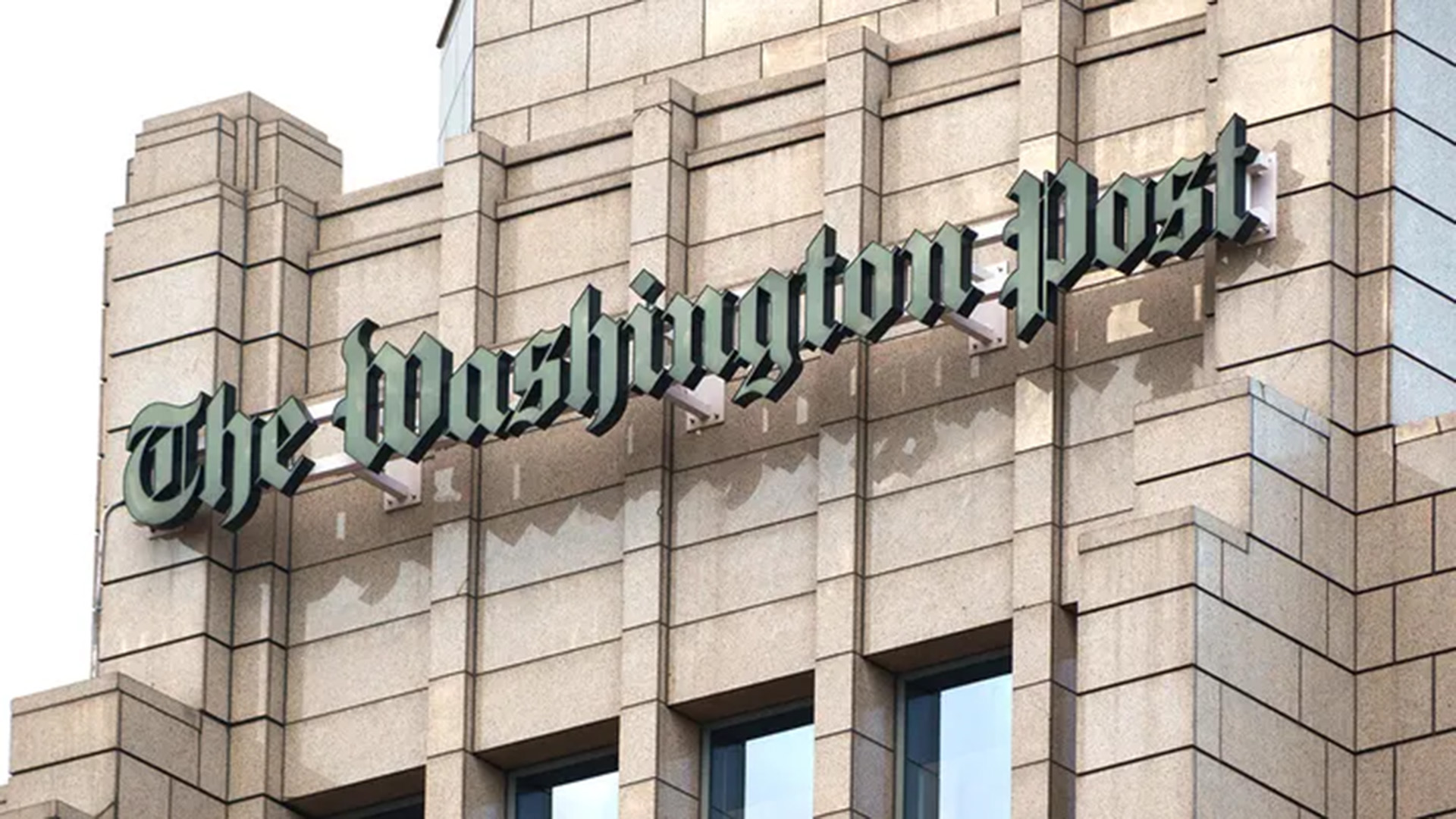
On 4 February 2026 the Washington Post sacked a third of its newsroom. Three hundred and ten journalists out of eight hundred, entire sections abolished: sports, books, the daily podcast "Post Reports." The entire Middle East team, the Cairo bureau chief, correspondents in China, Iran, Turkey. Every photojournalist. The local desk covering Washington itself, the city where the paper was born, cut from forty reporters to twelve. Executive editor Matt Murray explained the decision on a Zoom call from which both owner Jeff Bezos and publisher Will Lewis were conspicuously absent. Murray spoke of a "strategic reset" and pointed to artificial intelligence and the collapse of organic search: "down by nearly half in the last three years."
Marty Baron, editor of the Post from 2012 to 2021, the man who steered the newsroom through Trump's first term and oversaw the reporting that earned two Pulitzer Prizes, called that Wednesday "among the darkest days in the history of one of the world's greatest news organisations." Baron did not hesitate to name the cause: "Bezos's sickening efforts to curry favour with President Trump have left an especially ugly stain. This is a case study in near-instant, self-inflicted brand destruction."
Murray blames AI and the market. Baron blames Bezos. The truth, as is usually the case, lies in the structure of incentives, not in the narratives offered by those involved.
Jeff Bezos bought the Washington Post in 2013 for $250 million. His current net worth sits at roughly $253 billion. The Post loses approximately $100 million a year. This means Bezos could cover the paper's annual losses for over 2,500 years without touching his capital, calculated on present wealth alone and ignoring future returns. The Post's yearly deficit represents 0.04% of Bezos's fortune: less than a household with £80,000 in savings would spend on a monthly coffee.
The issue, then, is not that the Post is unsustainable. The issue is that the Post is no longer convenient.
British readers will recognise the underlying mechanics immediately, because they are watching an identical process unfold in real time with the Epstein files. The cost-benefit calculus of association and protection operates the same way whether the asset in question is a diplomat or a newspaper. When Bezos bought the Post, investigative journalism was a reputational asset. Owning the paper that held political power to account gave him a kind of civic immunity: he was the billionaire who invested in democracy. "Democracy Dies in Darkness" was not merely a slogan; it was a strategic positioning.
But the incentives have realigned. Amazon Web Services holds federal government contracts worth billions annually: a $10 billion contract with the NSA in 2021, a share of a $9 billion Pentagon contract in 2022, cloud computing contracts with the CIA, and over $140 million with ICE. Blue Origin, Bezos's space company, secured a $3.4 billion NASA contract in 2023 and is competing for $5.6 billion in Pentagon launch contracts through to 2029. In this context, a combative and independent Washington Post is no longer an asset. It is an operational risk.
The sequence is instructive. In October 2024, days before the presidential election, Bezos killed an editorial already drafted by the newsroom endorsing Kamala Harris. The same day news of the suppressed endorsement circulated, Trump was seen meeting the CEO of Blue Origin. Robert Kagan, a Post columnist for twenty years, resigned immediately, calling it a "quid pro quo." In early 2025, the Post announced its opinion section would no longer publish anything opposing "personal liberties and free markets": an editorial line that effectively excludes systematic criticism of corporate power. In the months that followed, a string of high-profile journalists departed. February 2026: mass redundancies.
Each step follows the same incremental logic. The cost of maintaining independent journalism rises with every government contract Amazon and Blue Origin must negotiate or renew. The reputational benefit of owning the Post diminishes with every critical article that irritates the administration. At some point the curves cross and the decision makes itself, or rather, it presents itself as "inevitable" and "strategic" when in reality it is the natural result of an incentive realignment that has been visible for years.
Murray told staff the newsroom "too often wrote from one perspective, for one slice of the audience." It is a revealing sentence. He is not saying the journalism was poor. He is saying it was aimed at the wrong audience: the one that expects a newspaper to function as a check on power. The new audience the Post intends to serve is the one that creates no difficulties for the owner's commercial relationships.
Anyone who has observed the British media landscape over the past two decades will find none of this surprising. The pattern of billionaire media ownership producing editorial capture is well documented on this side of the Atlantic. What makes the Post case clinically interesting is the speed and transparency with which the mechanism has operated. Most media owners manage the transition more gradually; Bezos has compressed the entire cycle into barely eighteen months, from the killed endorsement to the gutted newsroom.
The Post case illuminates a broader pattern that applies whenever media encounter super-wealthy ownership. Quality investigative journalism carries a modest financial cost on a billionaire's balance sheet and an enormous democratic value for society. But in the owner's individual calculus, that democratic value does not appear. What appears is the risk that a well-documented article might jeopardise a government contract worth billions, irritate a commercial partner, or attract regulatory attention to other parts of the group. The positive externalities of journalism, the benefit it produces for society as a whole, do not enter the owner's private equation. It is the same mechanism we see with victims treated as externalities in the Epstein affair: the cost exists, but the person making the decision is not the one who pays it.
There is a detail that condenses the whole affair with almost literary precision. Among the journalists sacked was Caroline O'Donovan, the reporter who covered Amazon for the newspaper owned by Amazon. Her redundancy simultaneously reduces costs and eliminates a potential embarrassment. There is no need to suppose that someone gave an explicit order to remove her from the newsroom: the system produces this outcome naturally when incentives are aligned in a particular direction.
Murray's narrative about AI and organic search is not false in the strict sense. Organic search is indeed declining and artificial intelligence is changing how people access information. But using these factors as the primary explanation is rather like attributing the sinking of the Titanic exclusively to the presence of the iceberg without mentioning the speed of the ship, the shortage of lifeboats and the decisions of the captain. The structural factors affecting the media market exist for every newspaper. Bezos's decision not to invest in addressing them, having spent billions on Blue Origin and having accumulated $250 billion in personal wealth, is a choice, not a fatality.
Baron is right in his judgement, but his analysis does not go deep enough. This is not about Bezos's personal cowardice. It is about the ordinary functioning of a system in which media outlets are assets in the portfolio of individuals whose principal interests lie elsewhere. When those principal interests require good relations with political power, independent journalism shifts from asset to liability and its fate is sealed.
The question that remains, for anyone who observes the structural dynamics of power, is not whether independent journalism will survive. It will survive in some form, because demand for verified information exists. The question is whether billionaire media ownership is structurally compatible with independent journalism, or whether it inevitably produces this type of outcome whenever the owner's commercial interests come into conflict with the paper's civic function. The empirical evidence, from the Post to numerous other titles that have passed through the same cycle, suggests the conflict always resolves in favour of commercial interests. Not through individual malice, but because the system is designed that way.