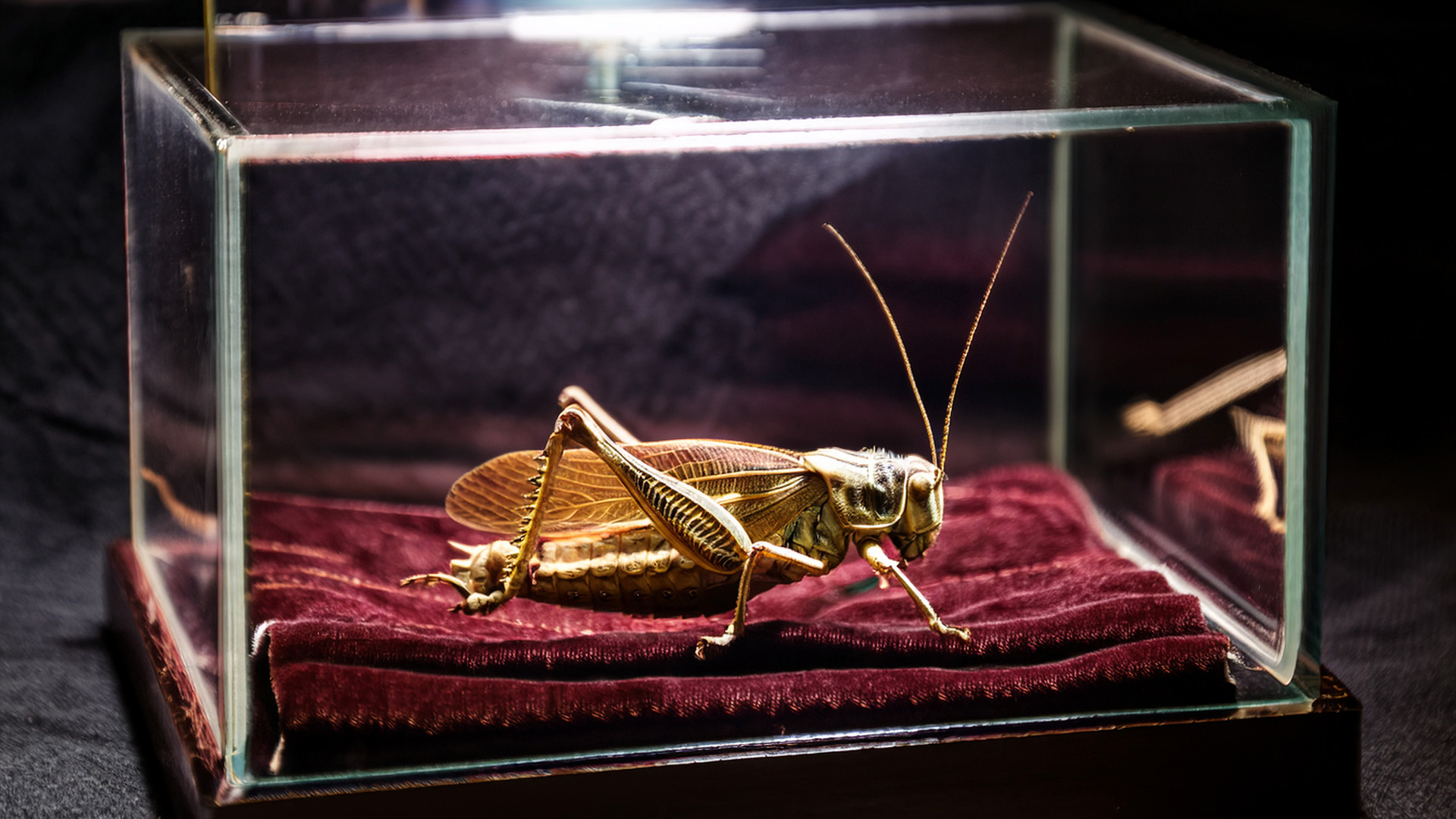
The well dressed locust
Posted on: 19 April 2026
The Porsche Macan shares its platform with the Audi Q5. This is not forum gossip, it is accounting documentation: Porsche has paid Audi 1.15 billion dollars in licence fees to keep using that platform, and the next combustion Macan due in 2028 will be openly based on the new PPC platform developed by Audi for the new Q5. The current CEO Michael Leiters keeps insisting it will still be "a real Porsche", a formula anyone fluent in corporate communication translates instantly: we are telling the customer exactly what he fears, and we are betting he will keep choosing not to understand.
The typical Macan buyer knows none of this, or rather knows it vaguely and has decided not to think about it, because the Macan lets him say "I drive a Porsche" in social contexts where "I drive an Audi Q5" would not produce the same effect. The two cars share the same chassis, the same multilink suspension, the same basic engineering logic. The difference lies in the tuning, the badge on the bonnet and a premium the customer pays willingly precisely because the difference exists mostly inside his head. The day he realises the Macan is a Q5 in Porsche dress, he will not go back to the Q5, because by then he will also have realised the Q5 would do perfectly well. He will leave the segment altogether.
This is where any serious analysis of contemporary luxury must begin, and it is not a question of taste or cultural decay. It is a structural problem of incentive alignment.
The executive running a listed luxury brand operates on a ninety-day horizon, which is the fiscal quarter, while the brand entrusted to him is an asset built over decades and destructible in a handful of years. That asymmetry is not a footnote, it is the whole mechanism. His bonus depends on quarterly numbers, his career depends on quarterly numbers, the probability of his being sacked depends on quarterly numbers. The brand's reputational capital shows up on no balance sheet, is measured by no KPI, enters no performance review. So the rational manager, not the corrupt or wicked one, the merely rational one, will systematically convert reputational capital into quarterly cash flow, because that is exactly what he is being paid to do.
The locust is not evil. The locust is a creature optimised to consume somebody else's harvest and fly away before the next winter. If you place a locust inside a farming system and rate its performance by how much of the crop it manages to eat in a season, you will get precisely the outcome you are rewarding. The locust-executive of contemporary luxury is the natural product of an incentive system that positively selects for the propensity to extract value from the asset rather than preserve it. Whoever rises to the top of these groups is someone who has previously proven he can grow the numbers, which in a reputational asset usually means knowing how to eat it better than the others. Reverse Darwinism applied to luxury governance.
Here is how the mechanism works. A luxury brand produces value through a delicate equilibrium of perceived scarcity, real quality and symbolic capital accumulated over time. As long as the brand is managed as an asset to be preserved, the equilibrium holds and generates high margins sustainably. When the brand is managed as a quarterly cash flow generator, the system starts converting reputational capital into immediate revenue. Every entry-level product, every downward line extension, every third-party licensing deal, every new outlet in a provincial airport is a withdrawal from an account no one is topping up. The account feels abundant, because generations of predecessors worried about filling it, and the illusion is that one can go on withdrawing without consequence. Until the day the account is empty.
What makes this mechanism particularly treacherous is that the cliff is not gradual. There is no declining curve that warns you in advance. Reputational capital holds, holds, holds until one day it stops holding and when it stops, it stops abruptly. The fifty million aspirational customers evaporated from the personal luxury market over the past two years, documented in the Bain and McKinsey analyses, are not people who became suddenly poor or suddenly frugal. They are people who looked inside their shopping bag and realised that what they were holding was no longer what they thought they had. They noticed the monogram was everywhere, the leather quality was debatable, the price had risen out of all proportion to any actual cost increase. And they stopped buying.
The McKinsey figure that over eighty per cent of luxury sector growth in the last five years came from price increases rather than volume gains does not describe a premiumisation strategy. It describes the locust's last meal before the harvest runs out. You raise prices because you have to hit the quarterly numbers the market expects, and because you are already saturating the one segment still carrying you, which is the aspirational tier. You raise prices until the aspirational tier can no longer afford it, at which point the aspirational tier walks away and you discover there is nobody beneath, because you had built all your growth precisely on them.
The pattern is not new, it is simply unusually visible now because we have several parallel cases to observe. Jaguar under British Leyland in the 1970s is perhaps the British textbook example: a marque of genuine engineering heritage and cultural resonance, progressively hollowed out by cost-cutting, industrial chaos and parts-bin sharing, until by the early 1980s the name "Jaguar" had become shorthand for unreliability in the mouth of the very middle classes who had once aspired to own one. Aston Martin under Ford between 1987 and 2007 is another case worth remembering with precision: Ford financially rescued the marque from bankruptcy, which ought to be acknowledged, but did so at the cost of fitting the DB7 with indicator stalks lifted from the Ford Fiesta and installing Volvo's satellite navigation on the DB9. The financial rescue was real, the reputational erosion was equally real, and when Ford sold Aston Martin in 2007 the brand needed a decade of reconstruction that has still only partly arrived.
Burberry sits closer to home and more recently. Through the late 1990s and early 2000s the check became so widely licensed, counterfeited and ubiquitous that it migrated from aspirational outerwear to the unofficial uniform of a social stereotype the tabloid press was happy to caricature. It took Rose Marie Bravo, then Angela Ahrendts with Christopher Bailey, the better part of a decade to drag the brand back up the ladder, and the scars of that descent remain part of the cultural memory of the name. Gucci did something similar on the continent in the early 2000s, plastered monograms across everything down to flip-flops, and lost a generation of clients to Hermès who have never come back.
Here is where the paradox opens up, the one Nassim Taleb has described well when writing about antifragility even though he has not applied the concept in precisely this direction. The quarters that look best are exactly the quarters in which the brand is losing most reputational capital, because they are the quarters in which the locust-executive is extracting most aggressively. The accounts celebrate, the financial press writes of records, the share price rises, analysts raise the target price, the CEO picks up the maximum bonus and perhaps an improved retention package. All of this happens in the precise moment the system is becoming most fragile, because fragility is measured by no one. When the cliff comes, the cliff quarter will be a surprise to everyone, even though it had been written twelve quarters earlier by whoever signed off on the entry-level expansion plan.
Porsche at present still holds a considerable reserve of reputational capital to burn, far more than Aston Martin had in 1995. The 911 GT3 and the genuinely iconic cars in the catalogue are still serious machines, built with genuine competence, and the marque rests on the reputation of those. The problem is that the share of Porsche customers buying a 911 GT3 is marginal, while the share buying a Macan is dominant, and the second customer is financing, through his premium, the very existence of the first. When the second customer catches on, and he is starting to catch on right now, with Porsche reporting disappointing quarterly numbers, global deliveries in 2025 down ten per cent and Chinese deliveries collapsed by twenty-six per cent, and the share price having fallen from its post-IPO peak of 120 euros in May 2023 to an all-time low of just above 35 euros in March of this year, the first customer will stay but will no longer be enough to hold the structure up.
The counterfactual exists and is visible every day. Hermès has done none of these things, has not extended lines downward, has not licensed the name, has not accelerated Birkin production to meet demand. In 2025 its operating margins stayed above thirty per cent while those of its listed peers dropped to fifteen, returning to 2009 levels. The difference is not moral, it is structural: Hermès remains under family control, the heirs operate on a generational time horizon, the decision-maker is not a manager on a quarterly bonus but a reference shareholder who has to hand the asset on to his children. The incentives are aligned with preservation rather than extraction. The system works because it has been protected from itself.
The clinical lesson of all this, if we want to call it a lesson, is that mass-market luxury is not a cultural phenomenon but a symptom of governance. The brands that have been eaten by locusts were not betrayed by their customers, they were betrayed by incentive structures that selected for locusts and promoted them to the top. The customer who walks away is not a disloyal customer, he is a customer who has worked it out. And by the time the customer has worked it out, it is usually already too late for whoever signed the business plan four quarters earlier, because by then the locust-executive has moved on, bonus in the pocket, ready to consume the next harvest.