The owner makes the city
Posted on: 2 July 2026
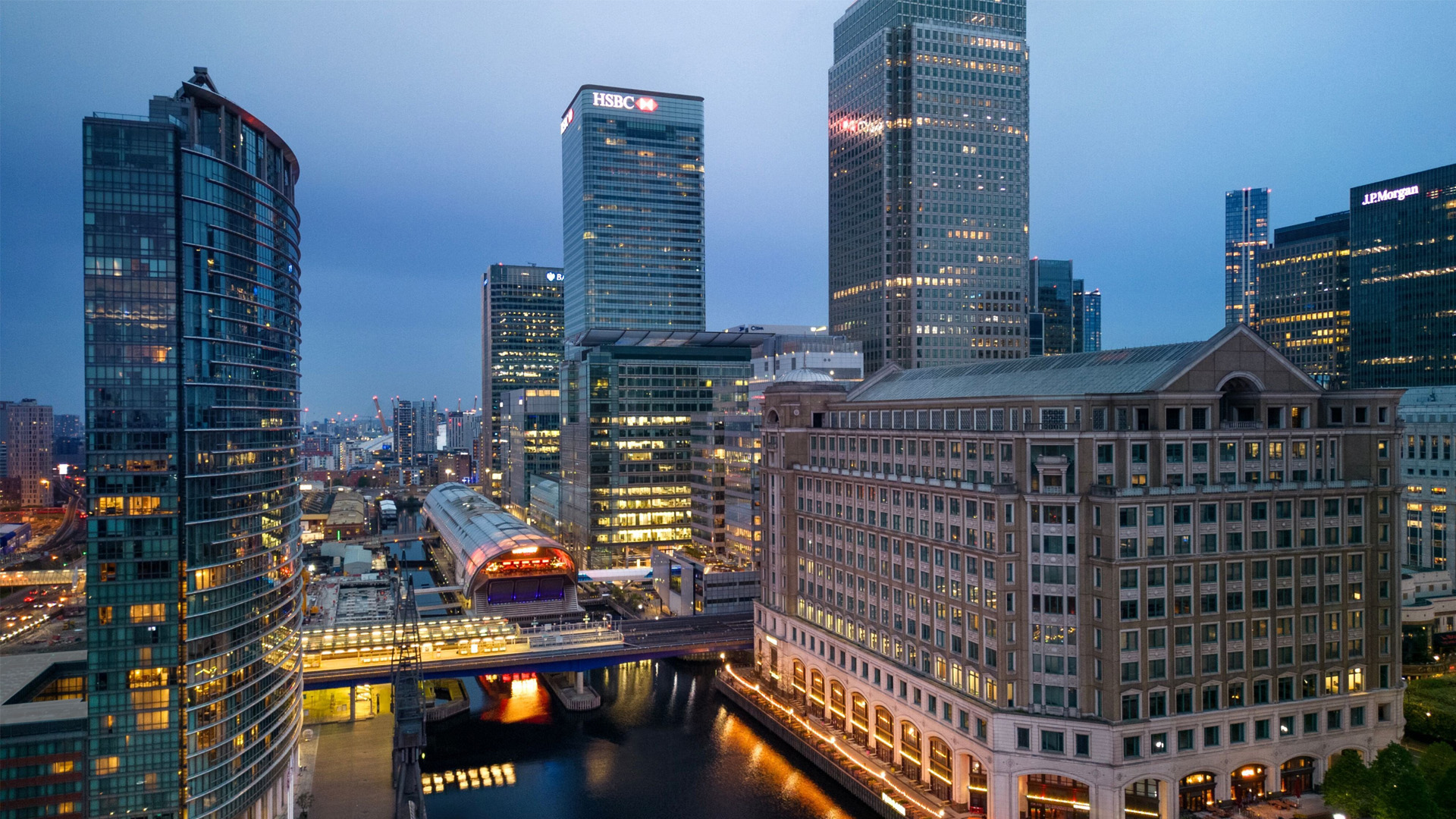
I live in Canary Wharf when I am in London, I work there too and the street I walk along in the morning belongs to someone. Not to the council, not to the Crown, not to that diffuse thing we call the public realm, which belongs to no one because it belongs to everyone. This city within a city belongs to a company. The pavements, the benches, the flowerbeds clipped to the millimetre, the discreet security that makes you feel noticed without making you feel watched: all of it has an owner with a name and a balance sheet. And the thing, I will admit it at once, because it is the point everything else proceeds from, does not trouble me. It is a very good place to live.
That was the uncomfortable part, and I put it at the top rather than save it for an artful ending. The private enclave is usually written up in the register of exposé: the surveillance, the exclusion, the simulated city for those who can afford it. Britain even has a name for the genre now, the pseudo-public space, mapped and listed by journalists once it emerged how much of the apparently open city, Granary Square at King's Cross above all, is in fact private land run under private rules. It is a comfortable register because it leaves the reader on the right side. My own experience complicates it, because the truth is that the place works, it is handsome, it is safe to the point that when I go back into the rest of London it is the rest of London that looks shabby. That is where one has to begin, not with the easy critique.
The question I put to myself when I arrived was a simple one. How did a stretch of abandoned industrial marsh become first the centre of world finance and then this, a neighbourhood out of a brochure where life resembles the advertisement that sells it, with the difference that here the advertisement is true? The answer is not a story of individual genius. It is a story of ownership.
In the 1970s the Docklands east of the City were a void: the basins shut, the port dead, a desolation that began a few stops from the Square Mile and that no municipal plan had the faintest idea how to fill. The state solved the problem in the most radical way available to it. It took the problem away from the boroughs. In 1981 the London Docklands Development Corporation was created, a body that stepped over the local councils and their democratic planning, and in 1982 the Isle of Dogs became an Enterprise Zone, with tax breaks and loosened planning controls. Put plainly, before the private city could be built the public switched off public planning and cleared the ground of risk. The private tower stands on a concession, not on a free market. It is worth holding on to this when Canary Wharf is told as the triumph of private enterprise over bureaucracy, because without that very precise bureaucratic decision to remove the residents' voice none of it would be there.
Then came the capital, and here the part that interests me begins. The Big Bang of 1986 deregulated London finance and created demand for enormous trading floors that the medieval City, all narrow lanes and small blocks, could not physically house. Olympia and York, the Reichmann brothers' company, read the mechanism cleanly: finance had to expand into space, and the only empty space near enough was the Docklands. In 1991 One Canada Square went up, the tallest building in the United Kingdom for nearly twenty years. The diagnosis was perfect. The timing was a catastrophe. They built into the property crash of the early 1990s, and in 1992 Olympia and York went into administration, one of the largest property bankruptcies in history. Being right too early is indistinguishable from being wrong, because in either case you lose the asset. The cleanest proof of it is that in 1995 Paul Reichmann had to buy his own building back from the administrators, through a fresh consortium. The man whose vision was correct had to repurchase his own idea at a discount, once the failure had wiped out the people who financed it.
This is what changes the way you look at the place. The vision of Canary Wharf outlived the people who owned it. There is no single proprietor; there is a chain of proprietors who handed the idea on, each one burning in turn: the Reichmanns, their creditors, the consortium of the buy-back and today the Qatari sovereign fund alongside the Canadian giant Brookfield, for whom Canary Wharf is merely one of many small assets on the books. The idea buried its authors one after another and went on summoning whatever patient capital each era had to offer. The estate does not reward the bold; it consumes the under-capitalised and lets itself be owned only by those who can sit through the collapses. When the Underground finally reached it in 1999 with the Jubilee Line, the place had already survived one death. It would pass through another.
The neighbourhood that makes you feel you are living inside somebody else's endless scroll, the one I see now, is not even the original vision. That was a monoculture of offices, deserted after six, a daytime dormitory for bankers that switched off the lights at seven in the evening and died. The handsome residential quarter, with its parks and its restaurants and people who linger on a Saturday, is the second idea, the forced pivot of the 2010s and 2020s, when remote work and the contraction of finance nearly killed the office model a second time. In 2024 alone the group refinanced around two billion pounds and needed a nine hundred million pound equity backstop from Brookfield to avoid going under. The handsomeness that makes my mornings agreeable exists because the first dream failed and was rescued by a second, built on the rubble of the first with the money of a Gulf state. The advertised life is a successful rescue operation, not a gift.
None of this is new, and this is where the story turns instructive rather than merely local. Canary Wharf is the Victorian company town brought up to date. Bournville, raised by Cadbury outside Birmingham for its workers, and Port Sunlight, built by the Levers on the Wirral, were exactly this: an industrialist with money and a settled idea of how people ought to live, places objectively better than the slums around them and at the same time environments where the rules were set by the owner. The case that stings most is Pullman, the model town George Pullman put up outside Chicago. It was orderly, clean, decent, so much so that in 1894 its inhabitants struck against it, because they could no longer stand living in a place where the employer was also the landlord, the shopkeeper, the mayor and the priest. The beauty and the control were one and the same thing, and at a certain point the second devoured the first.
There is, though, a difference that makes Canary Wharf a contemporary object rather than a piece of industrial archaeology, and it is the difference that makes it more potent without making it more benign. The company town extracted consent through dependency: live here, because here is the work and elsewhere there is nothing. Canary Wharf buys consent through desirability. No one is made to be here. I am here because it is frictionless, because it works, because it is pleasant to the degree that accepting to walk on a private street and to be governed by a company strikes me as a reasonable price for that pleasantness. Consent that is bought is sturdier than consent that is extorted, because it does not generate strikes. It generates a waiting list.
And here I have to stop on the point I refuse to settle in a single direction, because to settle it would be dishonest. The reason the place works is precisely the reason it is not a city in the civic sense. It works because it has one owner with aligned incentives and deep pockets, free of the friction of local politics, of compromise, of the council that argues over every bench. The qualities I love and the fact that it is not a true democratic city are produced by the same mechanism; they cannot be prised apart. And the conclusion, the one that anybody raised to think of the city as common ground finds hard to accept, is that private governance may simply do better than municipal democracy at producing liveable urban space, and that people move because the private keeps what the public promised and failed to deliver. People vote with their feet. I am one of those who chose to move: not as a critic gone undercover, but as a satisfied resident.
One question remains, and I leave it open because I do not have the figure that would close it. How much of this quality is governance and how much is plain selection by income, a filter on who comes in that would yield order and cleanliness with no managerial genius at all. If the answer is the second, then Canary Wharf teaches nothing transferable; it is merely an enclosure for those who can pay, dressed up as a model city. If it is the first, then it is evidence that the way we have built cities for two centuries, the public and contested and slow way, is the inferior one, and that is a thing half of Europe is not ready to be told. The attempts to reproduce it from a standing start, the private cities announced by the Gulf monarchies, the smart quarters designed and then quietly abandoned by the technology companies, have nearly all failed so far, which suggests that Canary Wharf worked through an unrepeatable combination of tax break, sovereign capital and a financial centre that wanted exactly that space at exactly that moment.
And in any case I ought to be used to the cameras, because in Lugano, in the other part of my life, the order is denser still and the surveillance so well mannered that it does not read as surveillance, and no one there calls it dystopia, because they call it quality of life.
Tomorrow I leave the house, I walk on a street that belongs to someone and I am fine with it, and it is that sentence that ought to unsettle me, more than any camera.