The infinite overton window
Posted on: 27 November 2025
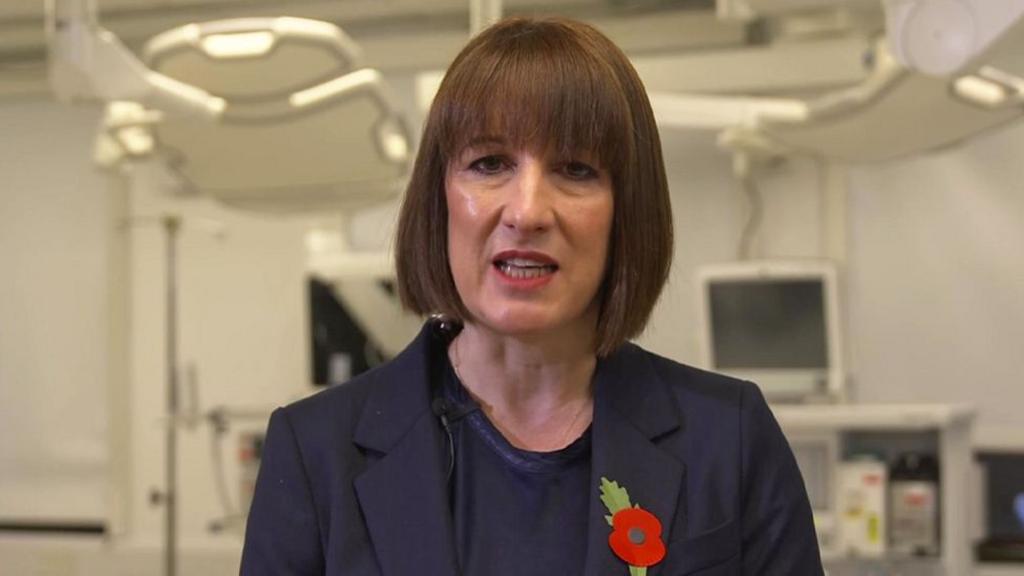
Rachel Reeves, Chancellor of the Exchequer, presented her second annual budget yesterday. Twenty-six billion pounds in new taxes. Then, in interviews the following day, she rejected criticism that she had raised taxes to fund increased welfare spending.
The problem is that the Office for Budget Responsibility, the independent body that assesses Britain's public finances, says precisely the opposite. Spending increases amount to eleven billion pounds by 2029, primarily to cover reversals on welfare cuts and the abolition of the two-child benefit cap. Taxes are rising to pay for this, plus a safety buffer on the public accounts.
Reeves is not technically lying. She says taxes are needed to cover the productivity gap left by the Conservatives, sixteen billion pounds in reduced revenue according to the latest estimates. But it is a game of accounting mirrors: welfare spending increases immediately, tax revenues arrive towards the end of the decade. In between, borrowing.
The mechanism
What is happening in the United Kingdom is a textbook case of what we might call the infinite Overton window.
The Overton window, in its original formulation, describes the spectrum of politically acceptable ideas at any given moment. Positions move from unthinkable to radical, then acceptable, then sensible, then popular, and finally enshrined in law. The movement occurs gradually, through public debate and cultural change.
But there exists a degenerate version of this mechanism, one that operates not on ideas but on promises. It works like this: a party promises something during the election campaign. Once in government, it discovers that keeping that promise costs more than anticipated, or that circumstances have changed, or that it simply hadn't done its sums properly. At that point, it has two options: admit the error, or move the goalposts.
The second option is almost always the one chosen. The goalposts shift, what was unacceptable becomes necessary, what was promised becomes impossible given the circumstances. And since circumstances can always be invoked, the game can continue indefinitely.
The British case
Keir Starmer's Labour won the July 2024 election with a clear promise: no tax increases on working people's income. Fourteen months later, we are at the second consecutive budget that raises taxes substantially.
The first budget, in October 2024, introduced forty billion pounds in new taxes. Reeves said it would be the only major fiscal budget of the parliament. The second, presented yesterday, adds another twenty-six billion. The justification? The Conservative legacy was worse than expected.
But there is a detail that makes the mechanism even more evident. Labour has not technically raised income tax rates. Instead, it has frozen tax thresholds until 2030, which means that with inflation and wage increases, ever more people will end up paying higher rates without anyone having formally raised taxes. It is the so-called fiscal drag, taxation by inertia. It respects the letter of the election promise whilst completely violating its spirit.
According to official estimates, by 2029 there will be seven hundred and eighty thousand new taxpayers in the basic rate band, nine hundred and twenty thousand in the higher rate band, and four thousand in the additional rate band. People who will pay more tax not because someone raised it, but because no one updated the thresholds.
The question of blame
Every system that continuously shifts the goalposts needs a scapegoat. Someone to whom responsibility can be attributed for promises not being kept.
Labour is using what we might call a system of progressive levels of blame.
The first level, currently in use, is the Conservative legacy. Fourteen years of Tory government left the public finances in worse condition than expected. It is a narrative with a basis in truth, but one with an expiry date. You cannot blame the previous government forever, especially when you are the one making the decisions.
The second level, already partially activated, is expert forecasts. Reeves continuously cites the Office for Budget Responsibility: it is they who say productivity has fallen, they who forecast lower revenues. The government is simply executing what the numbers demand. It is a sophisticated form of responsibility delegation: it is not we who want more taxes, it is objective circumstances that require them.
The third level, held in reserve, is external factors: global market volatility, trade wars, geopolitical fragmentation. When the Tory legacy and expert forecasts are exhausted as excuses, there will always be the world out there to blame.
There is also a fourth level, the nuclear option: one's own rebellious backbenchers. If things go really badly, the government could begin saying it wanted to be more prudent, but internal revolt forced it to make different choices. It is the perfect circular blame: everyone responsible, therefore no one responsible.
The breaking point
The problem with the infinite Overton window is that it presupposes an infinitely patient electorate. It is not.
British polling tells a story of collapse. Labour is at eighteen per cent, the historic low ever recorded by Ipsos for the party, the same level as May 2009 after the expenses scandal. Reform UK, Nigel Farage's party, is at thirty-three per cent with a fifteen-point lead.
Only thirteen per cent of voters are satisfied with how Starmer is performing his role as Prime Minister. It is the worst satisfaction rating recorded for any British Prime Minister since 1977. Rachel Reeves fares even worse: eleven per cent satisfaction, the historic low for any Chancellor, worse even than Kwasi Kwarteng after Liz Truss's disastrous mini-budget in 2022.
But the most significant figure is another. Half of British voters think Reeves had planned to raise taxes from the very beginning, that the election promises were false from the outset. Only twenty per cent believe the decisions reflect a genuine worsening of economic conditions since the election.
This is the breaking point. When half the electorate thinks you have been lying all along, it no longer matters whom you blame. You have lost the credibility necessary to make any future narrative work. The infinite Overton window stops functioning the moment people stop believing there is a window.
Some might object that the mechanism can last much longer. Italy's First Republic is the demonstration: forty-four years of unkept promises, growing debt, and blame always attributed to others. Christian Democrats and Socialists operated the infinite Overton window with mastery for nearly half a century. Then 1992 arrived. Tangentopoli was not merely a judicial scandal: it was the moment when Italian voters collectively decided that the system itself had become unthinkable. The window did not shift, it shattered. Parties that had governed for decades disappeared within months.
The Italian case suggests two things. The first is that the breaking point can be very long in coming, much longer than any analyst could predict. The second is that when it comes, it comes all at once. There is no gradual decline, there is collapse. And what emerges from the rubble is not necessarily better than what was there before.
The open question
The British case raises a broader question. Is the modern political system structurally built upon this dynamic? Can contemporary democracies function only through promises that will not be kept and blame that will always be attributed to others?
Some argue yes. That the complexity of modern societies makes accurate forecasting impossible, that election promises are necessarily approximate, that voters ought to understand this and accept it as part of the democratic game.
But the British data suggest otherwise. They suggest there is a limit, that patience runs out, that the mechanism of perpetual blame has an expiry date. The problem is that when that limit is reached, what emerges is not necessarily a better system. It is often anger, fragmentation, and the search for radical solutions.
Reform UK at thirty-three per cent is the demonstration. Half of Britons say the country needs radical change. Not moderate, not gradual: radical.
The infinite Overton window, in the end, produces its opposite. By continually shifting the goalposts of what is acceptable to ask, one ends up making acceptable what was previously unthinkable. Only it is not the government that decides what becomes unthinkable. It is the voters.
And when voters decide that what is unthinkable is the system itself, the window no longer shifts. It breaks.