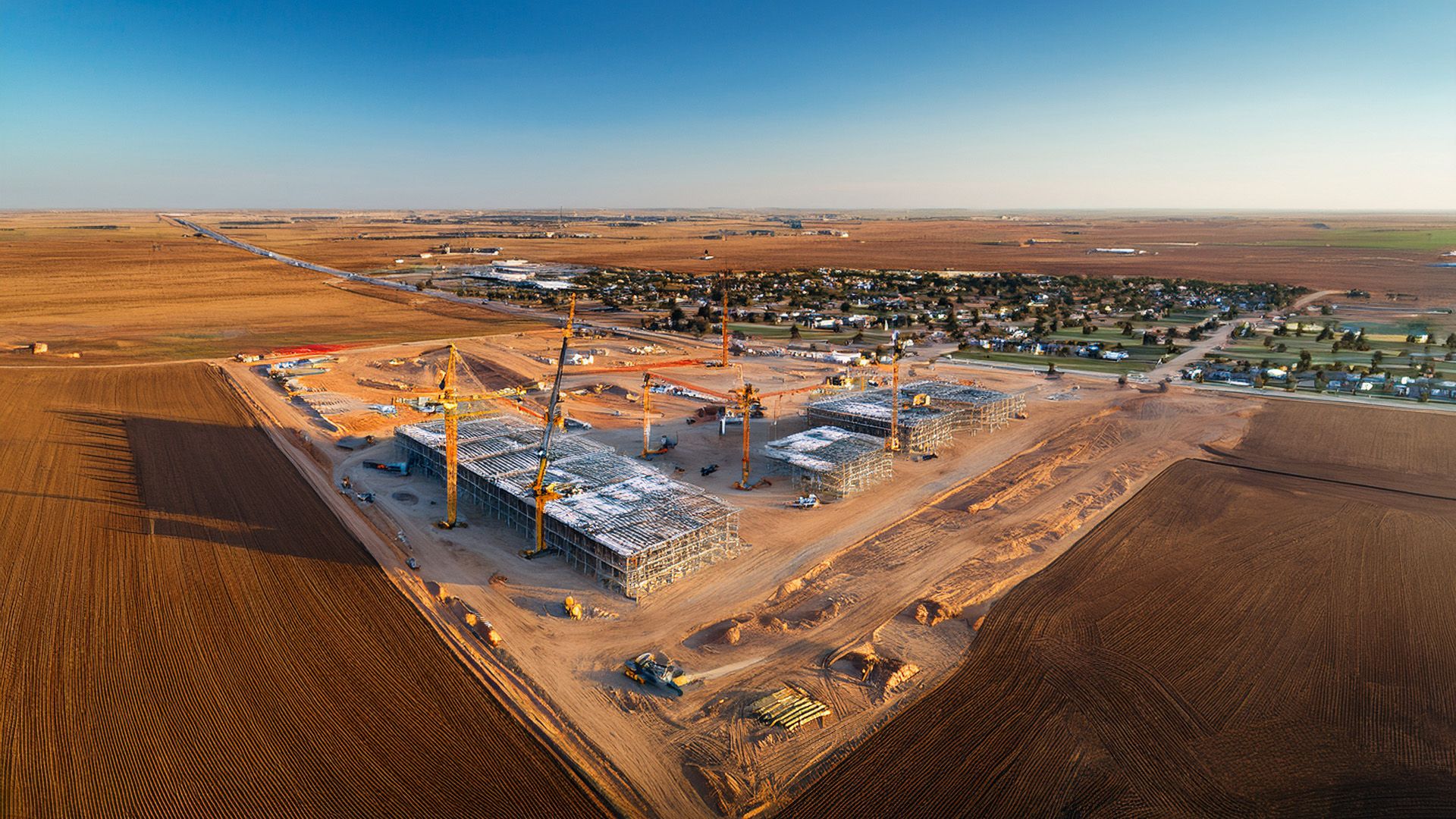
The factories coming home
Posted on: 16 April 2026
Every time an economic system absorbs a shock large enough, someone announces the end of globalisation. They are usually wrong in the short term and right in the long term, but in the wrong way: it is not that globalisation ends, it is rather that it changes shape and leaves different people behind than last time. I watched this play out in the digital transition of the creative industries in the 1990s. The production houses did not disappear. They hollowed out. They kept existing, but with a fifth of the staff thanks to technology, and the profiles they needed bore no resemblance to the people who had worked there before. What is happening in American manufacturing has the same structure. Just louder, and considerably better funded.
One number tells the story: $1.595 trillion committed to reshoring. And 82,000 factory jobs lost over the same period. Both figures are real. Both measured. The distance between them is the actual subject of this conversation.
The nominal catalyst is double: import tariffs heavy enough to make foreign sourcing genuinely painful, and a war around the Strait of Hormuz that has turned logistical certainty into something considerably more fragile. Johnson & Johnson has committed $55 billion to domestic facilities. AstraZeneca $50 billion. Real numbers, real groundbreaking ceremonies, real presidential announcements in front of flags. Manufacturing is coming home, or so the headlines insist.
What I want to say is not that this is untrue, but that the mechanism making the return possible is precisely what makes the employment promise attached to it structurally incoherent.
American manufacturing labour costs between $25 and $30 an hour, as of early 2026. In China, between $6 and $7. No tariff closes that gap without transferring it to consumer prices, eroding the purchasing power the same rhetoric promises to restore. The only arithmetic that works is removing labour from the cost equation: automation, robotics, control systems that replace the assembly worker with one technician per thirty machines. 81% of manufacturing executives said explicitly they would lean on automation rather than workers if production returned to American soil. Not from cynicism, but because the alternatives simply do not add up.
The character of what is being announced reflects this. The overwhelming majority of reshored positions fall into the high-tech or medium-high-tech category: controls engineers, robotics integrators, advanced manufacturing specialists earning $90,000 to $120,000 a year. Presented as a sign of progress, and in a narrow sense it is. But these are not the jobs that Licking County, Ohio, the community Intel's semiconductor megafacility is supposed to anchor, has the training infrastructure to produce. The facility, announced in 2022, has already slipped to 2030-2031: not because the funding dried up, but because environments of that complexity take years to build and then equipping them with the right people takes further years still.
I watched the same thing happen in 2016 with coal. The promise to bring mining back to Pennsylvania and West Virginia ran on structurally identical logic: return the production, return the jobs. The mines had not closed through ideological betrayal but because automation had already gutted them before cheap natural gas finished the job economically. The facilities that subsequently reopened did so with equipment requiring a fraction of the workforce the same site would have needed twenty years earlier. Coal output rose in certain periods, yet mining employment stayed flat. The manufacturing wave of today is the same story with larger capital commitments and more sophisticated rhetoric.
Only 81% of those declaring an intention to bring supply chains home have actually completed their plans: 2%. Not a typo. 81% say they will. 2% have done it. The rest exists in PowerPoint decks and press releases.
There is a detail on resilience that tends to get lost. A 2025 OECD analysis examined the actual effects of reshoring across a sample of economies and found that supply chain localisation had made half the assessed economies more vulnerable to external economic shocks, not less. The logic is straightforward once you see it: concentrating production domestically creates domestic dependencies, local bottlenecks, geographically dense fragility. A globally distributed supply chain is inefficient but absorbs shocks through redundancy. A domestic one manages geopolitical risk but is exposed to any event that hits national territory. The resilience being sought is not automatically the resilience being built.
On workforce formation the gap is starker still. 95% of US industrial organisations plan to introduce new automation within three years. The specialists those systems require take ten years to train. The factories take three to build. Over the next decade, an estimated 3.8 million manufacturing workers will be needed: 1.9 million of those positions are projected to go unfilled if the training system does not scale fast enough. And in between, immigration policy is compressing precisely the labour supply that previously filled roughly a quarter of manufacturing production roles. Accelerator and brake, on different roads, simultaneously.
The factory returning is real, as is the investment. The worker the rhetoric imagines waiting for it is a person with different skills from what the factory requires, living in communities where the relevant training pathways do not yet exist, who will discover this when the facility opens and hiring begins.
Not a deliberate deception. The logical consequence of what making domestic production competitive in a high-wage labour market actually demands. The only way to bring the factory back is to design it from the outset to need very few workers, and to need them highly qualified.
Everyone else was not on the list.
Sources: IndustrialSage US Manufacturing Investment Tracker (April 2026); Reshoring Initiative 2025-2026; Deloitte Manufacturing Outlook 2026; Bureau of Labor Statistics; OECD 2025 reshoring and resilience analysis; CNBC Manufacturing Executive Survey.