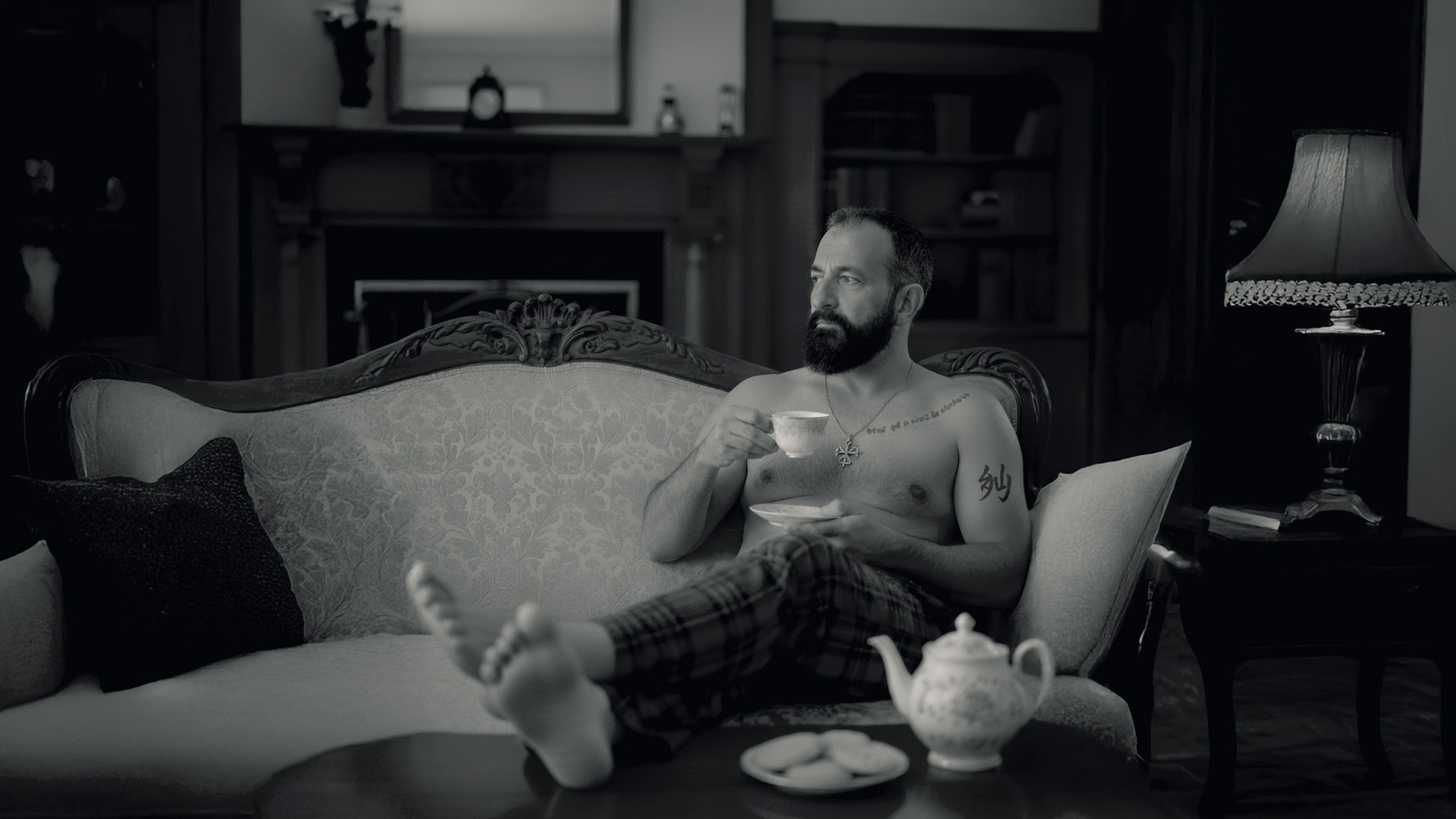
Tea time whenever that may be
Posted on: 29 December 2025
There's something peculiar about these days suspended between Christmas and New Year. The calendar insists they're days like any other, but we all know better. Emails slow to a trickle. Work messages become rare, almost apologetic, as if the sender were excusing themselves for the intrusion. The urgencies that a week ago seemed like matters of life and death reveal themselves for what they always were: things that could wait.
In this temporary void, something interesting happens. The thoughts we normally keep at bay through frantic activity find room to surface. Questions we skilfully avoid all year, about choices made, directions taken, what actually matters, appear while you stare at the steam rising from your cup. They arrive, linger for a moment, then slip away between one sip and the next. They don't demand immediate answers. They're content simply to be noticed.
It's easier to stop when the world around you stops too. You don't have to justify yourself, don't have to explain why you're not "producing". The permission is implicit, collective. Perhaps that's why these days taste different: not because something special happens, but because finally nothing does. And in that nothing, something else becomes possible.
The machine without an off switch
I have a complicated relationship with stopping. Complicated in the sense that for years I considered it a luxury I couldn't afford, then a weakness to hide, then an inefficiency to optimise. Those who design systems for a living develop a kind of professional deformation: they see mechanisms everywhere. In organisations, in markets, in relationships, in patterns that repeat across sectors and decades. The mind becomes a machine for connecting dots, identifying structures, anticipating dynamics.
The problem is that this machine has no off switch. Or rather: the switch exists, but it doesn't work as you'd expect. You can't simply decide to stop seeing patterns. The mind keeps working even when the rest of you is sitting on a sofa in tartan pyjama bottoms with a cup of Earl Grey in hand.
For years I experienced this as a flaw. The inability to truly disconnect, to be present without some part of me already analysing, connecting, projecting. I watched others who seemed capable of switching everything off and wondered what they had that I lacked. Then I realised perhaps I was asking the wrong question.
It's not about switching off. It's about changing your relationship with what won't switch off.
What you don't do
The discovery, for me, was that even those moments are part of the process. Not in the productivist sense of "rest that recharges you to work better", that's still hamster wheel logic. I mean something different: the acceptance that not doing is a form of doing. That many things sort themselves out without our anxious intervention. That the quality of what you produce depends also on the quality of what you don't produce.
It took time to arrive at this. There was no specific moment, no dramatic epiphany, no breakdown followed by rebirth as those selling personal development courses love to narrate. Just a gradual erosion, almost imperceptible, of the conviction that doing more automatically means achieving more. And the discovery, almost accidental, that some of the best insights arrive precisely when you're not looking for them. When you've let go. When you've stopped forcing.
The space that holds things together
Japanese gardeners have a concept called "ma", the empty space that gives meaning to what surrounds it. It's not absence, it's presence of another kind. It's what allows elements to breathe, to exist in relation rather than competition. Without the void, fullness becomes suffocation.
I began applying this idea to the way I work, and then to the way I live. Not as abstract philosophy, but as concrete practice. Leaving empty spaces in the diary not because I have nothing to do, but because that space is the "ma" that gives meaning to the rest. Allowing projects to breathe instead of smothering them with constant intervention. Accepting that not everything needs to be optimised, monitored, improved.
Systems that breathe on their own
The real paradox is this: the more you design systems that work, the more you learn that the best systems are those requiring the least intervention. That breathe on their own. That don't need you there controlling every variable. Fragile systems are those that collapse the moment you look away. Robust systems survive your absence. Truly well-designed systems improve when you leave them alone.
And if this applies to the systems you design, why shouldn't it apply to the system you are?
I've stopped feeling guilty about mornings spent drinking tea and gazing out the window. Not because in those moments I'm "processing" or "letting things settle", perhaps I am, perhaps not, that's not the point. The point is I've understood that rushing about to feel busy is merely wasted energy disguised as productivity. A way to avoid reckoning with more uncomfortable questions. A socially acceptable anaesthetic.
Thinking and being thought
These holidays have given me some of those moments. Mornings without alarms, afternoons without agendas, evenings without the sensation of needing to catch up on something. The mind continues doing what it does, seeing connections, noticing patterns, building hypotheses, but it does so in the background, like a programme running without requiring constant attention. Meanwhile the rest of me can be here, present, enjoying the taste of an Earl Grey with a splash of milk.
There's a subtle but important difference between thinking and being thought. Between using the mind and being used by it. For years I was on the wrong side of this distinction. I believed the more I thought, the more I controlled. Instead, the more I thought, the more I was controlled. By the thoughts themselves, by their apparent urgency, by their insistence that they were all important, all worthy of immediate attention.
Learning to let thoughts go without grasping at every one has been one of the hardest things. Not meditation in the formal sense, I've tried, it's not for me. Something simpler and more quotidian. The ability to notice a thought, acknowledge it, then let it pass like a cloud. It will return if it's important. If it doesn't return, evidently it wasn't.
The taste of the present
The biscuits beside the tea serve this function, in a way. They're an anchor to the present, an excuse to return here when the mind would carry me elsewhere. The taste of butter, the crumbly texture, the way they marry with the bergamot of the tea. Small pleasures that need no justification, no optimisation, no insertion into some larger framework.
Perhaps this is what these suspended days teach us, if we're willing to listen. That value lies not only in what we produce, but also in what we allow ourselves not to produce. That pauses aren't the opposite of work, but part of a larger rhythm that includes both. That sometimes the most productive thing you can do is nothing.
I haven't become a Zen monk, let's be clear. Tomorrow or the day after, the world will resume spinning at normal speed, emails will start arriving again, urgencies will return to seeming urgent. And I'll go back to doing what I do: seeing patterns, designing systems, trying to understand how things work in order to make them work better.
But I'll carry something from these days with me. The memory of a different rhythm. The confirmation that one can slow down without the world collapsing. And perhaps, every now and then, permission to sit with a cup of tea for no other reason than the pleasure of it.
Now, if you'll excuse me, this Earl Grey won't drink itself. And the biscuits have no intention of waiting.