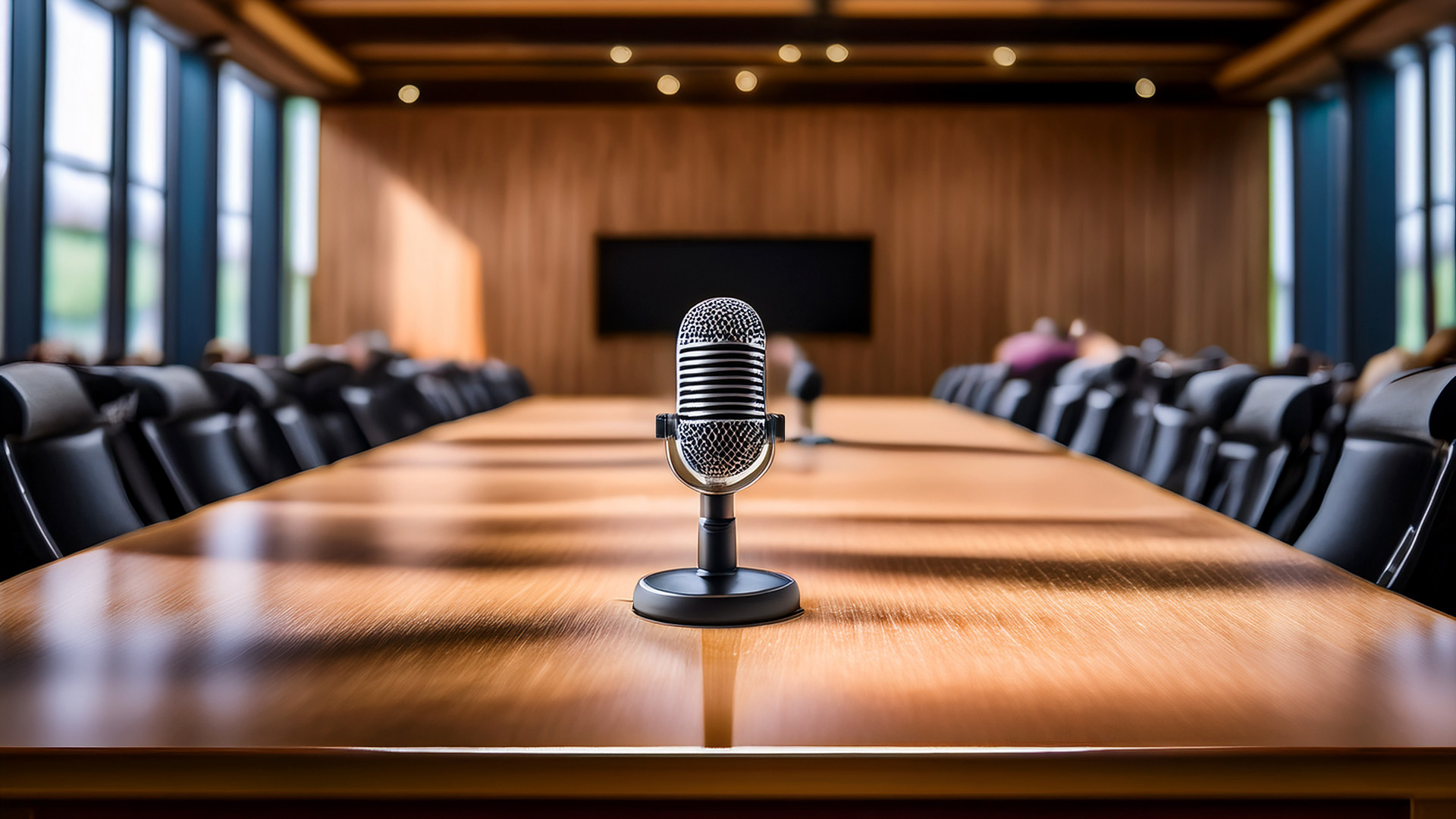
Silence as an asset
Posted on: 13 April 2026
Have you ever noticed that at the centre of almost every contemporary communication strategy there sits a kind of paradox?The more you say, the less you weigh. It is not a question of message quality: it is the arithmetic of attention. The problem is not new. It has simply become visible at industrial scale.
Consider a mechanism that anyone who has worked in high-intensity communication environments knows well. When someone intervenes on everything, every single intervention loses value, not because what they say is wrong, but because frequency has destroyed rarity. The ear adjusts, then switches off, by the same mechanism that means you no longer hear the traffic outside your own window, while a guest sleeping on your sofa takes an hour to fall asleep. The background noise does not disappear. It simply stops being information.
On social media this mechanism operates at accelerated speed because production is industrial and the marginal cost of each additional piece of content is close to zero. You can publish something every day, every hour, across every available platform simultaneously, and many do, convinced that constant presence produces authority. What it produces instead is familiarity without weight. The two things look similar from a distance. They are not.
Real authority has always contained a component of scarcity. Not artificial scarcity, not the strategic disappearance of the guru who reappears after six months of silence to sell a course. Genuine scarcity: that of someone who speaks when they have something to say and stays quiet the rest of the time without feeling any need to justify the silence.
Those who know the trade already understand. I think there is a structural difference between someone who uses their voice as a tool and someone who uses it as a presence. The tool sharpens with selective use; presence wears down with continuous use. A surgeon who operates eighteen hours a day does not become more skilled: they become tired and then dangerous. The same logic applies to those who work with words, even if the damage there is less visible and arrives more slowly.
Strategic silence is not absence. It is selection. It is the deliberate decision that this moment does not require your contribution, that adding your voice to the chorus would dilute both. It is also, in many contexts, the most sophisticated form of listening available: not the silence of someone with nothing to say, but that of someone collecting information that others are giving away freely while they speak.
Negotiators have always known this. Whoever falls silent in a negotiation forces the other side to fill it. And filling silence almost invariably carries a cost: information is surrendered, anxieties revealed, concessions made that were never necessary. Silence is pressure without words.
In public communication the same principle applies, simply at a different scale. Every time you take a position on everything, you hand your interlocutors a complete map of your reactions. You become predictable. And the predictable, in the attention economy, gets scanned and discarded before it is even read.
The scarcity of saying has become a rare asset precisely because almost no one is willing to endure the discomfort of not being present. There is a real pressure, algorithmic and social at once, pushing toward continuous production. Resisting it requires a precise clarity about what you are building over the long term and the patience to accept that in the short term a reduced presence can look like a step backwards. I know with certainty that it is not, but you need to know that before it happens, not after.
The final paradox is that the content which carries the most weight is almost always produced by those who publish the least, and this is not random correlation but the mechanism of scarcity applied to communication: when someone who normally stays quiet takes the floor, attention straightens up by itself. No amplification required, no paid distribution. It simply arrives, and those who follow have learned that when something does arrive, it is worth stopping for.
Building that kind of reputation takes time and a certain tolerance for temporary invisibility. Two things the current ecosystem systematically discourages.