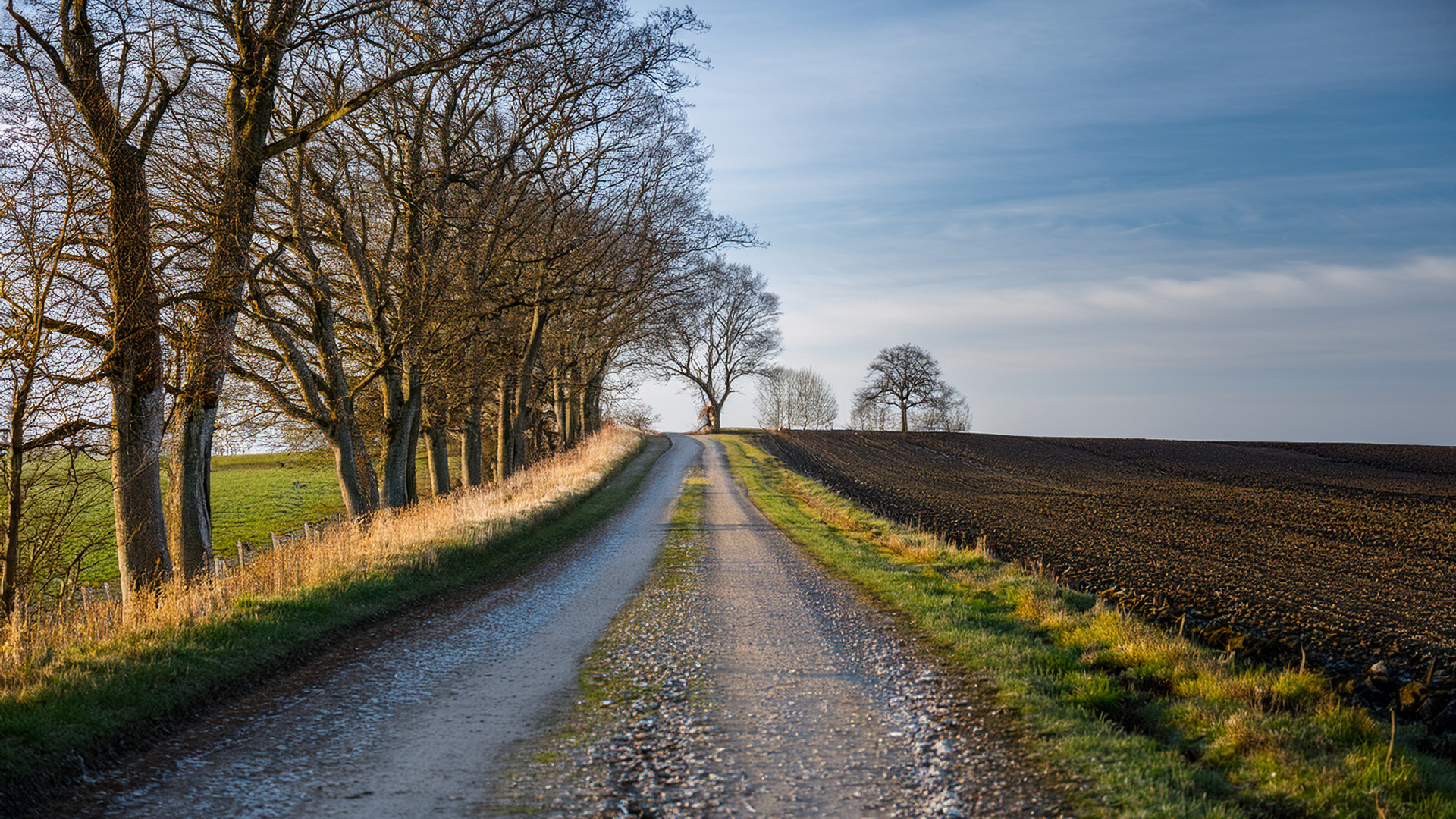
All thoughts worth having begin on foot
Posted on: 18 March 2026
All thoughts worth having begin on foot
All thoughts worth having begin on foot
There is a line from Nietzsche that fitness equipment manufacturers would do well never to read: "Only thoughts reached by walking have value." He wrote it in Twilight of the Idols, most likely after one of his three or four-hour walks through the Engadine Alps, notebook in pocket, mind working at a pace no desk could have produced. Between 1881 and 1888 he spent over six hundred days at Sils-Maria, and nearly all of them he spent walking and writing, writing and walking, as if the two things were the same thing, which they rather are.
The word "peripatetic" is not a philological curiosity. It is an operational description. Aristotle founded his school at the Lyceum in Athens in 335 BC and called it the Peripatos, which in Greek means simply "the walk", because that is what one did: one walked and thought, thought and walked, and there was no separating the two gestures. Kant in Königsberg kept so precise a routine that neighbours set their watches by his passing, a fixed point in the chaos of existence. Rousseau wrote that his best ideas always came to him in motion. Thoreau spent years constructing the philosophical architecture of walking as a political act, not merely a physiological one.
Then the attention economy arrived, and transformed every unoptimised moment into waste.
The research is unambiguous, for anyone who still requires scientific authority to justify an activity that human beings have practised for three million years. Stanford measured it: walking increases divergent thinking, the capacity to generate new ideas, by an average of sixty per cent. It matters not whether one walks through woodland or on a treadmill facing a blank wall: the body in motion releases something that the body at rest cannot produce. The paradox the researchers had not anticipated is this: the treadmill works, yes, but markedly less well than walking without a fixed destination, through an environment that responds, changes, and offers unscheduled lateral stimuli. The brain does not merely want to move its legs. It wants to move through the world.
The treadmill is a walk in captivity. It technically satisfies the measurable parameters, but it lacks everything that makes walking a cognitive act rather than a merely cardiovascular one. It lacks the unpredictability of the route, the background noise one cannot control, the changing angle of light, the unexpected encounter, the turn decided at the last moment. It is precisely those interruptions to the programme, those unoptimised stimuli, those moments when attention drifts to something irrelevant, that allow the mind to make its underground connections. Defocusing is not inefficiency. It is the mechanism.
The generation that transformed every moment into content, every pause into a production opportunity, every displacement into a podcast to consume, has not merely lost a pleasure. It has lost a cognitive tool. When Steve Jobs called his walking meetings, he was not performing corporate wellness: he was consciously using a mechanism he knew to work. When Mahler walked the forests of the Salzkammergut before sitting at the score, he was not taking a break. He was working in the most effective manner he knew. The walk is not the time before work. It is part of the work, that part which cannot be seen, but without which everything else is merely mechanical execution.
The difficulty is not that people no longer walk. They walk constantly, but almost always towards something: the station, the supermarket, the car park, the meeting. They walk with headphones in, eyes on the telephone, minds already at the destination. What has been lost is not the physical gesture but the intention: walking without arriving anywhere, walking as an end in itself, walking to allow thought to move along its own trajectories rather than those imposed by a calendar.
There is a subtle but decisive distinction between walking and travelling. Travel optimises the distance between two points. A walk has no points: it has a vague intention, a general direction, and allows the rest to emerge. It is this intentional vagueness that is genuinely subversive in an economy that measures the value of every minute, that has transformed leisure into functional recovery time, that treats doing nothing as a form of inefficiency to be corrected. A walk produces nothing visible. It cannot be shared, monetised, or optimised. That is precisely what makes it valuable.
Nietzsche walked alone. Aristotle walked with students. Jobs walked with whoever had something worth discussing. Three different modes, one identical mechanism: thought needs the body in motion to access certain registers. This is not metaphor. It is physiology. And the fact that in 2026 one must cite a Stanford study to persuade someone to leave the house without a fixed agenda says something very precise about the cognitive environment we inhabit.
If you know, you know. If you do not, you are probably reading this on a treadmill.