Without logo
Posted on: 25 June 2026
I know the difference between cotton and cotton waste, between percale and sateen, and it is not an expertise I expected to acquire. I live alone, nobody watches me sleep, yet that difference matters to me more than is reasonable to admit, perhaps because, boomer that I am, I sleep naked and the skin is not easily fooled but feels the long staple of percale, feels the false slipperiness of a department-store sateen, tells the full hand of a real terry from the stiffness of an imitation that turns to cardboard after three washes. I could walk into any shop on the high street and buy household linen of the highest quality, the brands are not lacking, but the trouble is that most of those brands tend the logo more carefully than the cloth, having understood that the flag sells better than the sheet. There exists a category of buyer who wants the sheet precisely as a flag, to be displayed folded on the bed the way one displays an embroidered monogram and that display gives me an almost physical discomfort.
A friend who lives in London told me some months ago about an Italian mill that works only for the hotel trade, one of those firms that dress the beds and the bathrooms of the finest hotels in the world without a single guest ever knowing its name. Mascioni. I went to look it up online and what I found is already half the story: a site that does not carry even the padlock of a secure connection, that sells nothing, that asks nothing of you, that confines itself to telling a story begun in the late fifties, in a workshop where two brothers printed silk scarves. A site any agency today would call due for a rebuild, and which instead says everything it needs to say: we make, we do not sell; whoever needs to find us already knows where to look. Behind that restraint, however, sits a genuine industry, one that for a quarter of a century finished the cloth of Italy's largest household-linen group and turns over tens of millions: not the modesty of someone who cannot afford more, but the choice of someone who could and does not wish to.
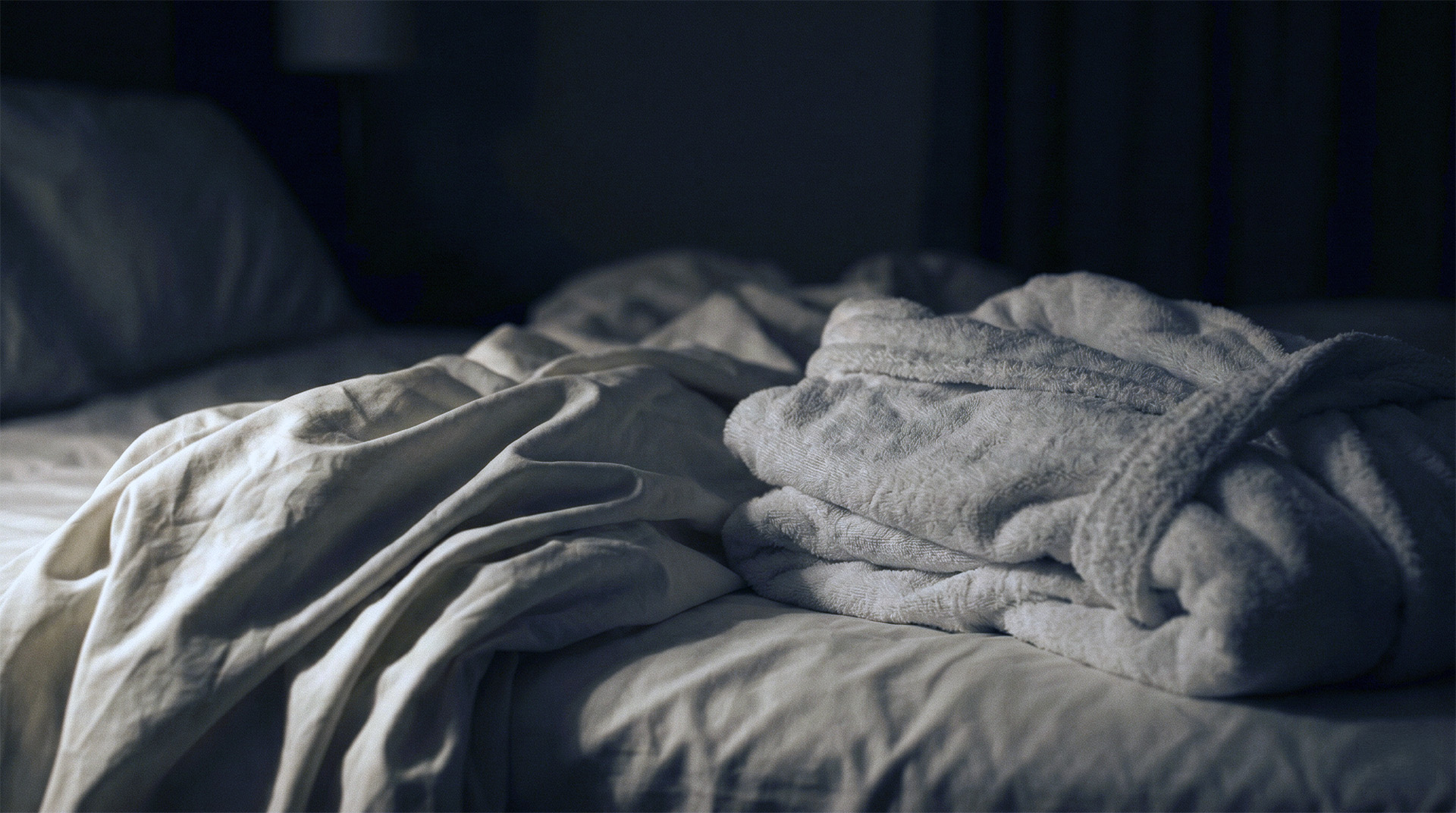
I discovered that somewhere there is a small factory shop, the kind meant for employees, open for a few hours a week, on a weekday I will not name. I took the car without telephoning first, because telephoning would have meant granting the impulse the time to cool, and I drove there. There was a woman, courteous, devoted to what she does in the way one manages to be only when the product has no need of defending. We went through sheets and bathrobes that to call beautiful is almost an insult. I bought everything I liked. No flourishes, no attempt to add to the bill something I had not asked for, because those products sell themselves and the people who make them know it perfectly well. At one point I had in my hands a bathrobe embroidered with the mark of a five-star hotel in New York, the sort that anyone who travels knows by heart, and the woman, with the ease of someone offering you a coffee, told me that if I preferred they would make it for me without the logo. Without the logo. That is the precise point at which real luxury parts company with everything else.
There is an old idea, they call it conspicuous consumption, according to which a good part of what we buy serves not us but the gaze of others: we buy in order to be seen buying, we wear in order to be seen wearing, we choose so that someone might recognise the choice. Veblen wrote it at the end of the nineteenth century and not much has changed since, if anything the social platforms have carried it to its purest form, where the object exists only to the extent that it is photographed. Almost all the luxury we know works in this way, even the discreet sort, even so-called quiet luxury, because understatement too is a message and presupposes someone capable of deciphering it. The sheet does not.
The sheet I sleep on alone is seen by almost no one. There is no observer to impress, no code to be read, no social return of any kind; there is only my bare back and the hand of the cloth, at two in the morning, with no witness. It is the only form of luxury that communicates absolutely nothing to anyone, and for that reason, to my mind, the only entirely honest one. Everything else can be suspected of pose. This cannot. When you remove the gaze of the other and what remains is still the desire for the material, then you know that desire was true, because it had no audience for which to perform.
That bathrobe I did not buy, in the end. What stayed with me, more than the goods I loaded into the car, was the woman's offer, we will make it for you without the logo, because it said something precise: that the substance can be had stripped of the insignia, that the hotel's name is the last thing that cloth needs. I like the idea of wearing excellence stripped of the name of the hotel that places it in the window, of keeping the substance and leaving the sign to others. A question stays with me from that afternoon, and it is not about Mascioni but about me, and perhaps about anyone who has read this far: "how much of what we call taste would survive if, all of a sudden, no one could see it any longer?"