What the display back hides
Posted on: 20 August 2026
The transparent caseback is a recent invention. For most of the twentieth century a wristwatch was sealed, and the movement inside was a matter between the maker and the watchmaker who would eventually open it. The sapphire window arrived in volume during the mechanical revival of the late 1980s and 1990s, when the Swiss industry, having survived the quartz collapse, needed to persuade buyers that a mechanical watch was worth several times the price of something more accurate. Showing the machinery was the argument. It has worked so well that it is now taken as a mark of candour, the manufacturer inviting inspection, and the buyer who turns the watch over and looks in is understood to be the buyer who knows.
He is looking at the only part of the object that was never concealed. The rotor turns, the Geneva stripes run across the barrel bridge, the jewels can be counted with a loupe and the blued screws catch the light, and none of it tells you who designed the architecture, who actually manufactures it, or on whom the company selling it to you depends. The scarce component in watchmaking is never visible through the glass. That was true in 1936 and it remains true now, and the industry's own history is unusually well documented, which makes it possible to follow the dependency all the way down rather than merely assert that it exists.
Begin with the firm almost nobody outside the trade can name, and which supplies calibres to a large share of accessible Swiss watchmaking. Sellita was founded in 1950 in La Chaux-de-Fonds by Pierre Grandjean as an établisseur, one of the many houses that assembled and finished movements on behalf of others, working from blanks produced by the ébauche factories that made the rough movement itself. During the 1980s it found its niche assembling calibres for ETA, the movement manufacturer that had by then been absorbed into the Swatch Group, and it did so on a scale that gave rise to the claim that Sellita assembled more ETA movements than ETA did. The work consisted of receiving partly built kits, completing them, regulating them and adapting them to the specifications of the brand whose name would appear on the dial. On the ETA 2824-2 in particular Sellita worked for decades, absorbing the tolerances, the friction points, the lubrication, everything that does not appear on a technical drawing but accumulates in the hands of people who build the same calibre several million times.
In 2002 ETA gave notice that it would begin restricting the supply of components to third parties. For Sellita this was a death sentence delivered by its only customer, and Grandjean sold the company. The buyer, Miguel Garcia, took the course that anybody in his position would have taken. The 2824 descends from an Eterna design of the early 1960s, the 2824-2 dates from the 1980s and the patents had long since lapsed, so what remained protected was not the drawing but the industrial capacity to make the thing, which was precisely the capacity ETA had spent thirty years transferring to Sellita and paying it to acquire. The SW200 reached the market somewhere between 2003 and 2008 depending on how the early batches are counted, and the technical difference from the original is close to comic: one additional jewel, twenty-six against twenty-five, sitting beneath the barrel on the arbor of the reduction wheel in the automatic winding train. Everything else is interchangeable to the point that a watchmaker can substitute one for the other without touching the case. The SW300 followed in 2008 as a copy of the 2892A2, the SW500 in 2009 as a copy of the Valjoux 7750, and only in 2014 did the SW1000 arrive as an original design. Sellita now produces well over a million and a half movements a year and is the primary supplier to dozens of respected brands.
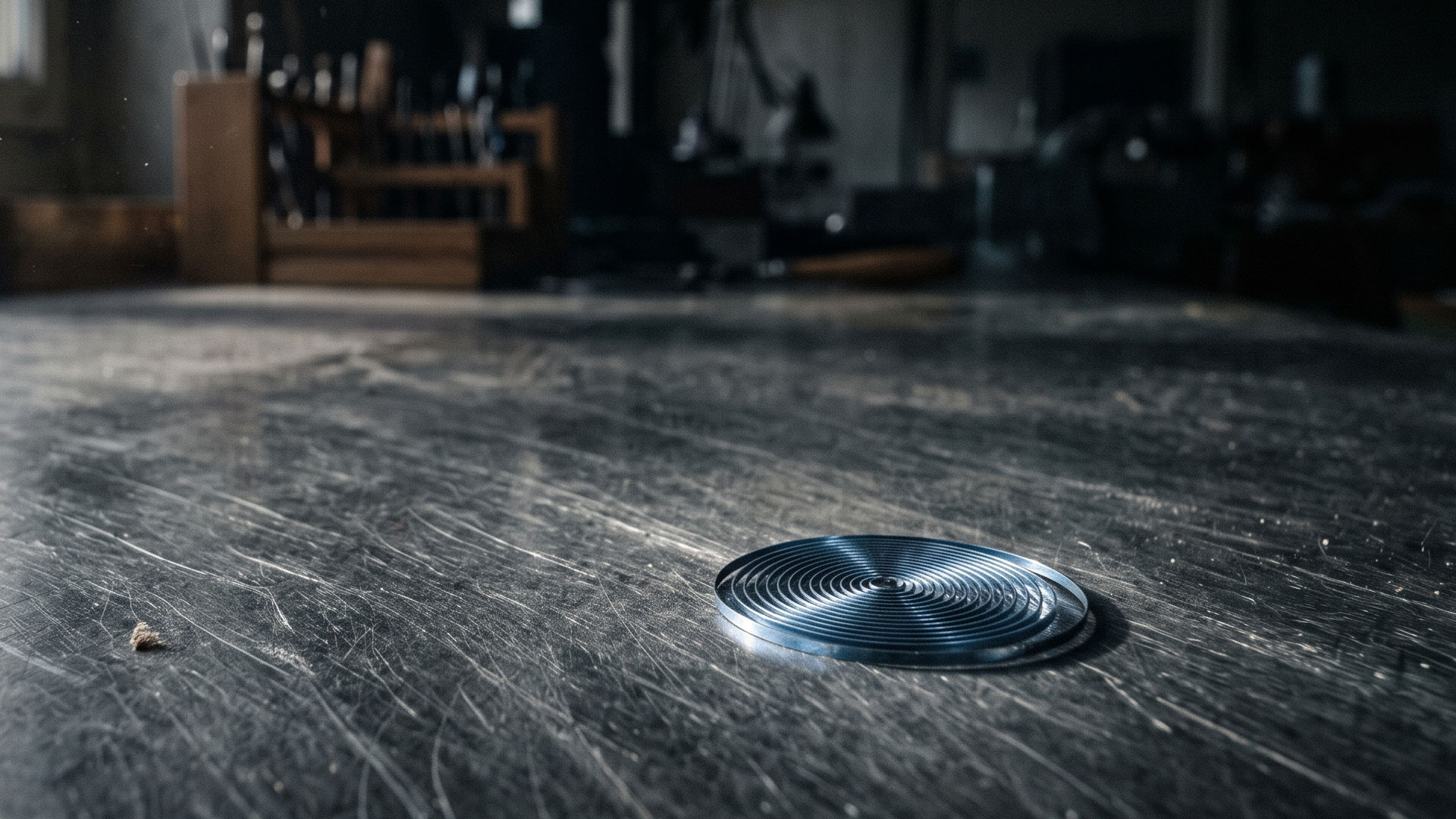
The part the caseback does not show is what happened next. Sellita cloned the architecture and could not clone the metallurgy. For half a century the component nobody looks at, the balance spring, came from Nivarox, which sits inside the Swatch Group, so a firm that had replicated everything replicable remained tied to its former adversary for the single thing that adversary had been able to make since the 1930s. Escaping took a decade of investment in escapement production, alternative springs on the higher grades and an intervention by the Swiss competition authority requiring Nivarox to keep delivering while the rest of the market equipped itself. The competitive advantage that mattered was never in the movement patents. It was in a coil of alloy the width of a fingernail, and the reason it mattered is metallurgical rather than mechanical: the spring has to hold its elasticity across temperature, which is the problem Charles Édouard Guillaume solved with his iron-nickel alloys and for which he was given the Nobel Prize in Physics in 1920.
Anyone buying a mid-priced Swiss watch on the evidence of the caseback is therefore assessing the one part of the system in which there is no informational asymmetry at all, while the asymmetry that determines who can enter the market and at what cost sits in a spring factory he will never see. This is not a modern degradation of an older, more honest arrangement. The pattern runs through the most prestigious names in the industry and it runs through their best years.
Rolex bought the factory that made its movements in March 2004. Until that date Rolex SA in Geneva and Manufacture des Montres Rolex SA in Biel were separate companies with separate owners, bound by a reciprocal exclusivity agreement struck in 1936 and never formalised beyond it. The Biel works had been opened by the Aegler family in 1878 and was run by the Aeglers and then by the Borers, with Harry Borer eventually selling to Patrick Heiniger for a sum reported at between one and two billion francs. Hans Wilsdorf had placed his first order with Aegler in 1905, which makes ninety-nine years. The brand that in the public imagination is vertical integration itself acquired its own heart after the twenty-first century had begun, having spent a century operating on an understanding between two families.
Zenith tells the same story from the other side. Its chronographs from the 1930s onwards came from Martel Watch, a factory at Les Ponts-de-Martel founded by Georges Pellaton-Steudler around 1911, which supplied chronograph ébauches to Universal Genève, Vacheron Constantin, Jaeger-LeCoultre and Girard-Perregaux while remaining formally independent and entirely unknown to the public. When Universal moved towards automatics at the end of the 1950s and Martel lost its principal customer, Zenith took control in 1959 and completed the acquisition in 1966. The El Primero, launched on 10 January 1969 and still the most celebrated Swiss movement of the twentieth century, was developed and assembled in the Ponts-de-Martel workshops by Martel's own people, in a factory whose name never appeared on a dial. The circle closes in the most entertaining way available: from 1988 to 2000 the reference 16520 Daytona ran the calibre 4030, an El Primero modified in more than two hundred respects, with the date removed, the frequency dropped from 36,000 to 28,800 vibrations an hour and the flat hairspring replaced by an overcoil. The stated reason was alignment with Rolex production and service standards, and specialists have generally taken the binding constraint to be lubrication, since fluid lubricants do not hold up at 36,000 and the dry process that does was not something Rolex service centres were equipped to perform. The most sought-after Daytona of the modern era is a watch running a competitor's engine, slowed down for reasons of maintenance.
Which brings the argument to the case that inverts the usual hierarchy. Miyota is understood as the cheap alternative, the movement fitted when Swiss is out of reach. It began in 1959 as a Citizen plant in the town of the same name in Nagano, started selling to third parties only in 1980, and the following year introduced the 2035 quartz calibre, which became the most produced movement in history. The Guinness certification of March 1999 records 1,769,593,600 units of the series since its debut in September 1981 and the manufacturer now claims more than five billion. Citizen has been the largest movement producer in the world since 1986. The poor-relation reputation rests on the 8215 of 1977, with its unidirectional rotor and its non-hacking seconds, but those were cost decisions taken deliberately, as the 9015 of 2009 demonstrated with its 3.9 millimetres and its 28,800 vibrations. As for the balance spring, Citizen makes its own, together with its mainsprings, and says so openly. It is the only firm in this account that never had to ask Nivarox for the part nobody looks at. In 2012 it bought Prothor Holding, comprising the La Joux-Perret manufacture, Arnold & Son and the component maker Prototec, for a figure reported at around 65 million francs, and in 2016 it added Frédérique Constant and Alpina.
So the independent Swiss producer lives off somebody else's design and spent twenty years working its way out of dependence on a rival for a spring, while the cheap Japanese one owns its designs, makes its own springs and holds manufactures in La Chaux-de-Fonds that supply European luxury watchmaking. The perceived hierarchy between them is an artefact of list price, which buyers in this market read as a proxy for quality because no other signal is available to them. Meanwhile the case, which absorbs most of the assessment when a watch is handed across a table, is in the great majority of instances 316L steel, the same grade used for surgical instruments, polished well or badly. Rolex uses 904L and calls it Oystersteel, a real industrial choice and still a surface detail beside the question of who makes your hairspring.
What is being purchased, when a mechanical watch is purchased, is a position in a chain of industrial dependencies a century long, in which the name on the dial is the final layer and almost always the least informative one. The window in the back exists to direct attention away from all of it, with the owner's enthusiastic cooperation. That is the ordinary mechanism of luxury markets generally. What distinguishes this one is that the chain can still be reconstructed, because the factories left records, the patents carry dates and the acquisitions have prices attached.