Seven days that nobody in Westminster saw coming
Posted on: 8 March 2026
There is a particular kind of political blindness that comes not from ignorance but from incentive. For the better part of a decade, British strategic culture treated the eastern Mediterranean and the Gulf as someone else's problem: America's problem, primarily, with occasional European complications. Brexit, in one of its less examined promises, implied a degree of selective engagement, the freedom to pick which entanglements mattered and which could be left to others. The past seven days have demonstrated, with some force, that the entanglements did not receive the memo.
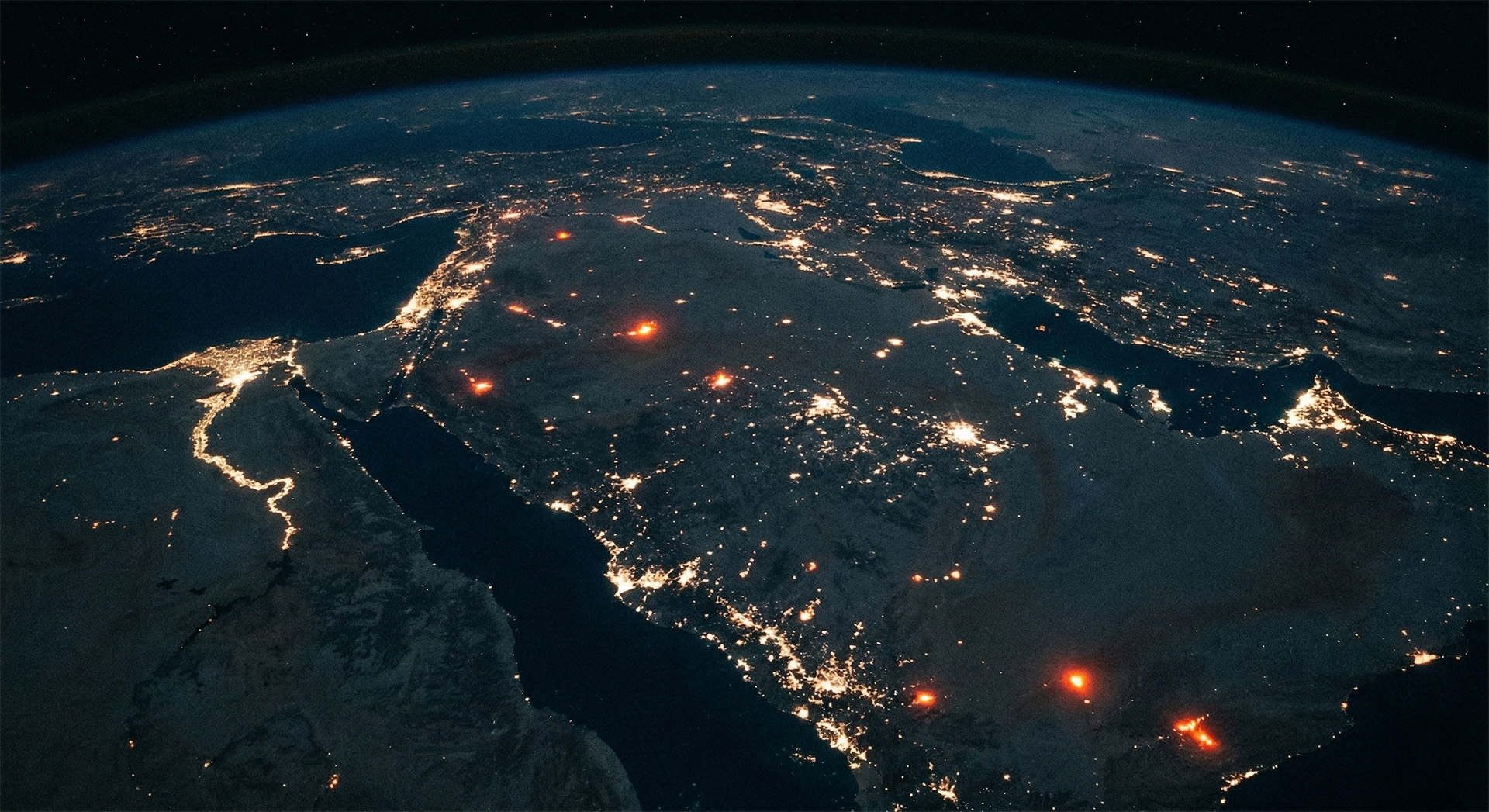
RAF Akrotiri has been struck. British sovereign territory, not a base hosted by another country's goodwill but Crown land administered directly by the Ministry of Defence, took an Iranian drone. Keir Starmer authorised the United States to use British bases for offensive strikes against Iran. Parliament was not recalled. The decision was made, announced, and absorbed into the news cycle within hours, treated less as a constitutional moment than as a logistics update. Meanwhile, at the other end of the world, a US Navy submarine sank an Iranian frigate in the Indian Ocean off Sri Lanka, the first warship sunk in combat by a submarine since the Falklands, and British destroyers are now operating in the Gulf alongside the American carrier groups that are running what the Pentagon has named Operation Epic Fury.
Britain is in this war. The question worth sitting with, on a Sunday morning before the week's events overtake the capacity to think clearly, is how the mechanisms that produced this situation actually work, because they will keep producing consequences regardless of what happens on the battlefield in the coming days.
The first mechanism to understand is the one that made the 28 February strikes feel, to those watching the diplomatic traffic, almost inevitable. The United States had spent months building a pressure architecture around Iran's nuclear programme, combining a military buildup, three rounds of indirect negotiations, and a publicly announced ten-day deadline. The third round in Geneva failed on 26 February. The deadline expired. At that point the choice was no longer between war and diplomacy: it was between who would absorb the credibility cost of backing down and who would accept the risk of going first. Trump does not absorb credibility costs. Iran, having declared it had rebuilt everything destroyed in the June 2025 strikes, could not concede without demonstrating that the entire deterrence architecture of the Islamic Republic was hollow. The strikes began at 2:30 in the morning of 28 February, Washington time.
The second mechanism concerns succession, and it is the one that will determine everything that follows. Khamenei is dead, killed without a formally designated heir, in an attack that Trump admitted had also eliminated most of the credible candidates to replace him. The Islamic Revolutionary Guard Corps, facing existential pressure and operating under active bombardment, forced the Assembly of Experts into an emergency online session, applied what sources described as sustained psychological and political pressure on its members, and pushed through the election of Mojtaba Khamenei, the dead leader's son, before the vote count was even completed. Israeli aircraft struck the Assembly's building in Qom while the session was still underway.
The result is a hereditary succession in a republic founded on the violent overthrow of a hereditary monarchy. The structural logic is not as paradoxical as it appears. The IRGC is not, at its core, an ideological institution in the traditional sense: it controls vast economic interests across oil, telecoms, construction and financial foundations worth billions. It has every incentive to install a leader without independent legitimacy, without a clerical base of his own, without the authority to constrain the Guards' power. A dependent supreme leader is the optimal outcome for an institution that has been quietly converting the Islamic Republic into a security state with religious decoration for the better part of thirty years. Mojtaba Khamenei, who has never held public office and does not hold the title of ayatollah, is precisely the kind of figure the IRGC can manage. That is why they chose him.
The third mechanism is the one with the most direct consequences for British households, though it has received less attention than the military operations. The Strait of Hormuz is effectively closed. Iran announced the closure formally; Iranian threats against shipping have brought maritime activity to a near standstill. Maersk has suspended Middle East operations. Oil storage tanks across the Gulf are filling because exports have stopped, which means that within weeks, not months, production itself will need to slow for lack of storage capacity. Brent crude has risen 24 percent in a week. This is not a temporary disruption that resolves when the fighting pauses. The infrastructure of global energy flows through a channel that one of the belligerents can threaten indefinitely, and that channel is now contested in ways that will take months to normalise even in the most optimistic scenario.
For a British economy already operating under significant fiscal constraint, with a government that has spent its first year managing one painful domestic tradeoff after another, the timing is, to use a diplomatic understatement, unhelpful. The inflation that energy price spikes generate is not abstract: it arrives in heating bills and petrol prices and the cost of goods that travelled through supply chains that run past the Strait of Hormuz. Starmer is managing a war in the Gulf and a cost of living problem simultaneously, with an economy that has limited capacity to absorb either.
The fourth mechanism concerns Europe's fracture lines, which this conflict has made visible in ways that the Ukraine war, for all its clarity of alignment, somewhat obscured. Spain refused to allow American forces to use its bases; Trump threatened trade retaliation within hours. Italy sent defensive weapons while its defence minister declared the US-Israeli attack a violation of international law. France authorised American use of its facilities. Germany debated a frigate while Friedrich Merz visited the White House. Britain followed Washington without public deliberation. The European response to this war is not a policy: it is a set of individual national calculations made under pressure, producing an incoherent aggregate that satisfies nobody and commits everyone to something they did not quite choose.
This matters for Britain specifically because the post-Brexit promise of strategic autonomy, the freedom to act as a global Britain unconstrained by European consensus, has in practice produced not independence but a tighter gravitational pull toward Washington. When the choice is between European hesitation and American decisiveness, the British reflex is to choose decisiveness. The cost of that reflex is that British sovereign territory becomes a platform for American offensive operations, British destroyers deploy to American carrier groups, and British foreign policy is set, in practice, in the Oval Office.
The fifth mechanism is the slowest and the most important: what emerges from Iran when the immediate crisis stabilises. Trump has cited Venezuela as his model, regime change through decapitation, a successor who cooperates, continuity of state structures under new management. The comparison is instructive primarily for its limits. Venezuela does not have 85 million people, a 45-year revolutionary state identity, active proxy networks across six countries, or a military institution with the IRGC's depth of economic and political entrenchment. The historical precedents for externally imposed regime change in states of this complexity are not encouraging. Iraq in 2003 and Libya in 2011 produced not cooperative successors but power vacuums that generated instability for years and drew in exactly the kind of sustained Western engagement that the architects of both interventions had promised to avoid.
Iran with a weakened, IRGC-dependent supreme leader and a shattered conventional military is not the same as Iran with no state structures at all. But the distance between those two outcomes is narrower than the current military momentum suggests, and the consequences of crossing it would extend well beyond the region.
This week on these pages we examine one mechanism each day: Saudi Arabia and what the potential collapse of its historic adversary actually means for the kingdom's own stability calculus; Turkey, the actor that has fired no shots and may gain more than any belligerent; Hormuz in numbers, what a prolonged closure means in concrete terms for European economies; and finally the Iranian succession scenarios, not predictions but the three structural paths that the evidence currently supports.
The point is not to predict what happens next. It is to understand the architecture well enough that what happens next does not arrive as a surprise.